



| Title: | A New Government in Nepal: What Lies Ahead? |
| Author/s: | Amit Ranjan |
| Abstract: | Balendra Shah’s electoral success in Nepal shows that the people have sought to replace the old political guards and, therefore, voted for change. However, the challenge for the new government is to fulfil the populist promises made to the voters. |
| Date: | 17 March 2026 |
| Read More |
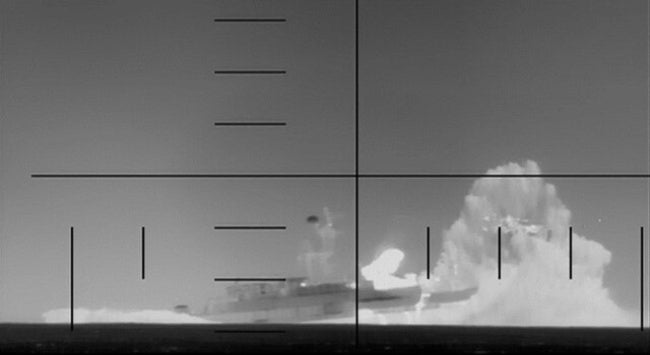
| Title: | US-Iran Conflict Escalation in the Indian Ocean: Implications for Sri Lanka’s Foreign Policy |
| Author/s: | Chulanee Attanayake, Rajni Gamage |
| Abstract: | The United States’ (US) attack on an Iranian warship in the Indian Ocean has extended the ongoing US-Israel-Iran conflict into South Asia’s neighbourhood. How regional countries respond will shape their ability to ensure free and safe passage through these critical waters while avoiding entanglement in a broader war. |
| Date: | 9 March 2026 |
| Read More |
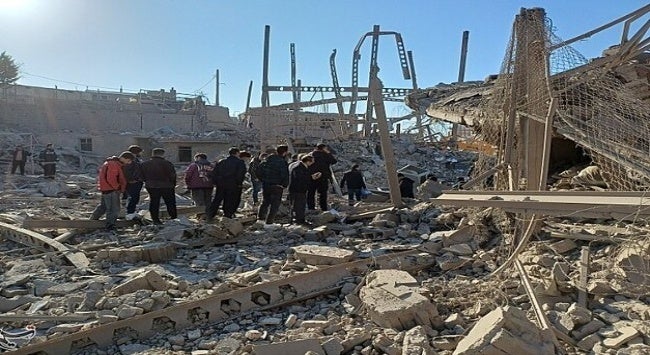
| Title: | India and the Middle East War: Growing Pressure, Limited Options |
| Author/s: | Sandeep Bhardwaj |
| Abstract: | While India could stay aloof from a conflict confined to Iran, it cannot ignore a broader war spilling across the Gulf. Yet even in such a scenario, its strategic options would remain severely constrained. |
| Date: | 9 March 2026 |
| Read More |
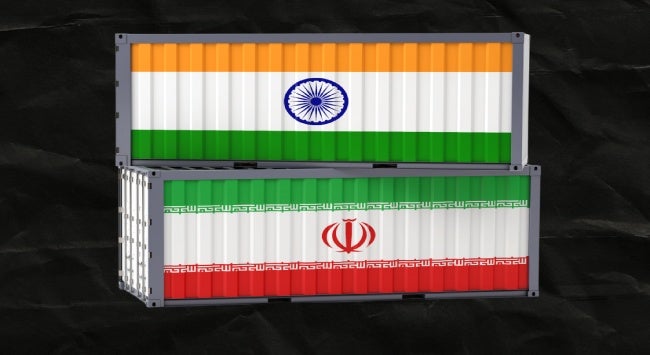
| Title: | A Prolonged Gulf Crisis: Implications for India’s Economic Security |
| Author/s: | Amitendu Palit |
| Abstract: | The Gulf crisis will adversely impact India’s economic security if it prolongs. Apart from energy prices, India’s worries will be over air travel disruptions, lower remittances, challenge for the Brazil, Russia, India, China and South Africa grouping, the India-Middle East-Europe Economic Corridor and New Delhi’s free trade agreements with the region. |
| Date: | 5 March 2026 |
| Read More |
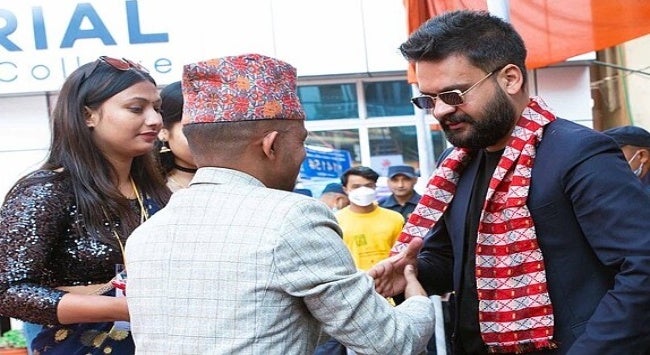
| Title: | Election 2026: Nepal Strives for a Change |
| Author/s: | Puspa Sharma |
| Abstract: | When the Taliban returned to power in Kabul in 2021, it was widely expected that Islamabad and Kabul would grow closer politically. Instead, tensions have escalated, relations have deteriorated and the two are now effectively at war. |
| Date: | 3 March 2026 |
| Read More |
| Title: | Misaligned Expectations: Pakistan-Afghanistan Military Escalation |
| Author/s: | Amit Ranjan |
| Abstract: | When the Taliban returned to power in Kabul in 2021, it was widely expected that Islamabad and Kabul would grow closer politically. Instead, tensions have escalated, relations have deteriorated and the two are now effectively at war. |
| Date: | 3 March 2026 |
| Read More |
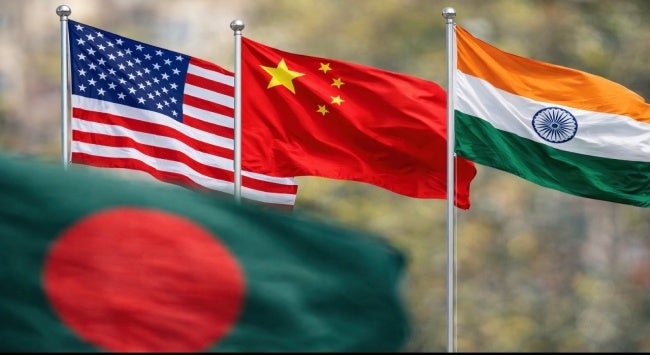
| Title: | Great Power Rivalry in Bangladesh: Implications for India |
| Author/s: | Ivan Lidarev |
| Abstract: | The strategic competition between the United States and China in Bangladesh is intensifying, as Washington seeks to broaden its footprint and counter Beijing’s growing influence. For India, this evolving rivalry presents more risks than opportunities. |
| Date: | 2 March 2026 |
| Read More |
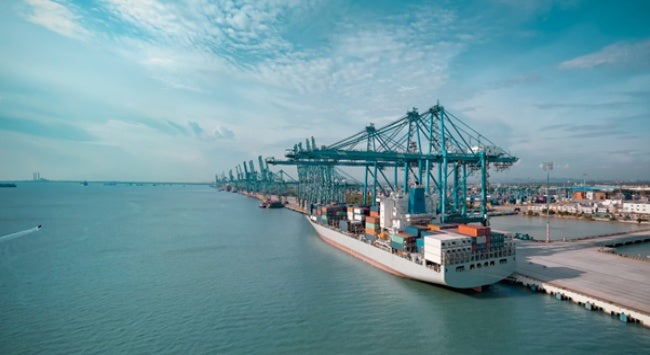
| Title: | India-European Union Collaboration: Green Shipping Corridors |
| Author/s: | Amitendu Palit, Saeeduddin Faridi |
| Abstract: | India and the European Union are developing green shipping corridors to decarbonise their maritime sectors. Despite multiple challenges, the corridors can be consequential assets in expanding sustainable trade and connectivity between India and Europe. |
| Date: | 26 February 2026 |
| Read More |
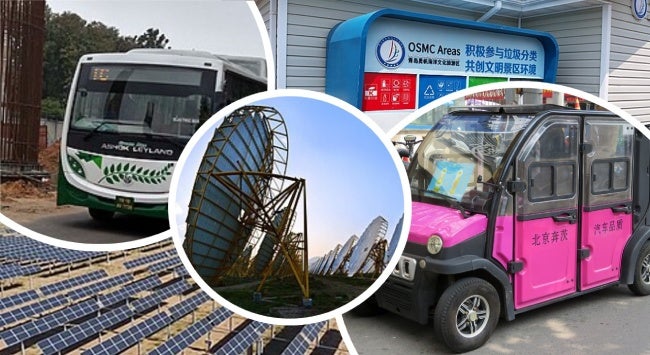
| Title: | Calibrating India-China Climate Cooperation in 2026 |
| Author/s: | Karthik Nachiappan, Pooja Ramamurthi, Constantino Xavier |
| Abstract: | Global climate politics is entering a fragmented and polarised phase. Geopolitical rivalry, fiscal constraints and shifting domestic priorities have weakened collective action, while trust in multilateral processes has eroded even as climate risks intensify. At the same time, the focus has shifted from negotiation to implementation – from setting targets to financing transitions, upgrading infrastructure and managing socio-economic trade-offs. In this context, cooperation is becoming increasingly selective, technical and interest-driven. |
| Date: | 24 February 2026 |
| Read More |
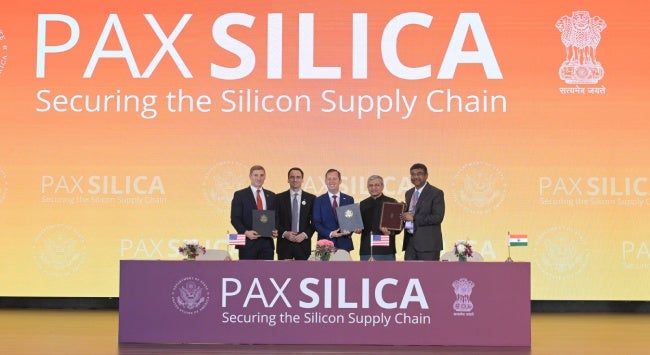
| Title: | India and the United States: Pax Silica and the AI Partnership |
| Author/s: | C Raja Mohan |
| Abstract: | India’s entry into the United States (US)-led Pax Silica Initiative and the India-US Artificial Intelligence (AI) Opportunity Partnership help renew the bilateral technology relationship after the turbulence of 2025. The deepening of India-US integration across silicon supply chains and AI computing structures access is bound to have ripple effects on Asian geopolitics and the evolving international architecture of AI. |
| Date: | 23 February 2026 |
| Read More |
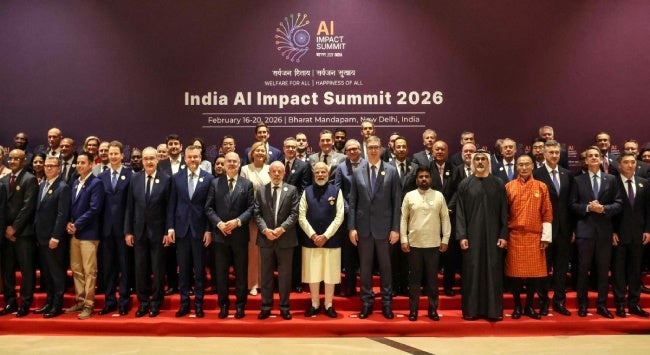
| Title: | India’s AI Diplomacy through the AI Impact Summit |
| Author/s: | Karthik Nachiappan |
| Abstract: | India’s Artificial Intelligence (AI) Impact Summit in February 2026 illustrates how New Delhi is using diplomacy to align development ambitions, technology sovereignty and geoeconomic strategy – reframing global AI governance around access, democratisation and Global South inclusion while deepening strategic supply-chain partnerships. |
| Date: | 23 February 2026 |
| Read More |
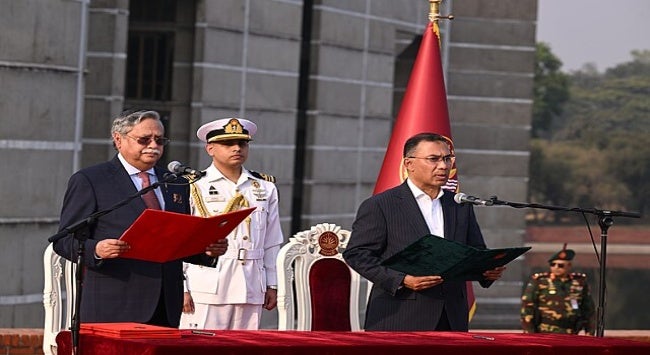
| Title: | Between Continuity and Transformation: Interpreting Bangladesh’s Election |
| Author/s: | Imran Ahmed, Muhammad Saad Ul Haque |
| Abstract: | Bangladesh’s election on 12 February 2026 returned a familiar dynastic party to power at the very moment voters signalled a demand for structural transformation. The outcome presents a fundamental paradox: can an anti-establishment reform agenda be implemented by the very political order it was meant to disrupt? The resolution of this tension will determine whether this electoral moment marks a genuine shift in institutional governance or merely a strategic recalibration of the status quo under altered political conditions. |
| Date: | 23 February 2026 |
| Read More |

| Title: | Bangladesh’s New Government: Navigating Challenges on Multiple Fronts |
| Author/s: | Amit Ranjan |
| Abstract: | The newly elected government led by the Bangladesh Nationalist Party confronts a series of critical challenges. Thes include fostering religious harmony, revitalising the economy, curbing the rising influence of conservative forces in society and striking a careful balance in its relations with the major global powers. |
| Date: | 23 February 2026 |
| Read More |
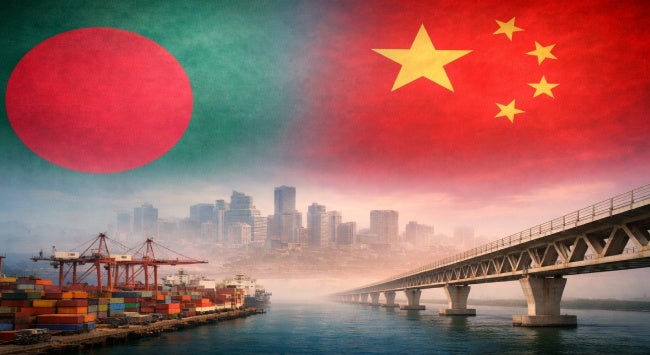
| Title: | Structural Ties, Political Change: Bangladesh, China and the Next Government |
| Author/s: | Imran Ahmed, Mriganika Singh Tanwar |
| Abstract: | China’s growing economic and political presence in Bangladesh is embedded in the country’s infrastructure, investment patterns and political relationships rather than limited to individual projects or governments. The post-election government’s defining task will be to manage that dependence in a way that preserves autonomy rather than locking the country into asymmetric reliance. |
| Date: | 11 February 2026 |
| Read More |
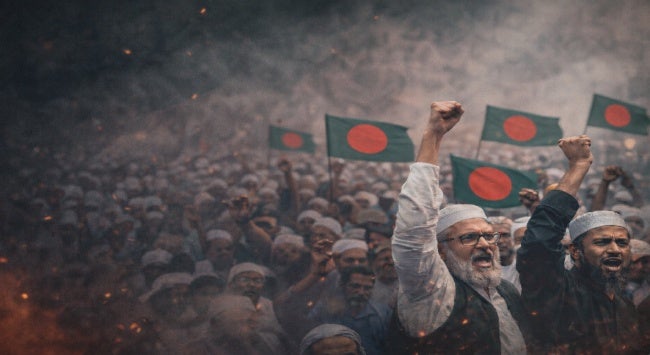
| Title: | Bangladesh’s Post-Uprising Political Order: Resurgence of Jamaat-e-Islami |
| Author/s: | Imran Ahmed, Mriganika Singh Tanwar |
| Abstract: | Jamaat-e-Islami’s resurgence reflects the broader transformation of Bangladesh’s political landscape following the upheavals of the country’s recent past. Rather than a simple ideological revival, the party’s re-emergence is rooted in organisational endurance, shifting alliances and the fragmentation of established patterns of political competition. |
| Date: | 10 February 2026 |
| Read More |
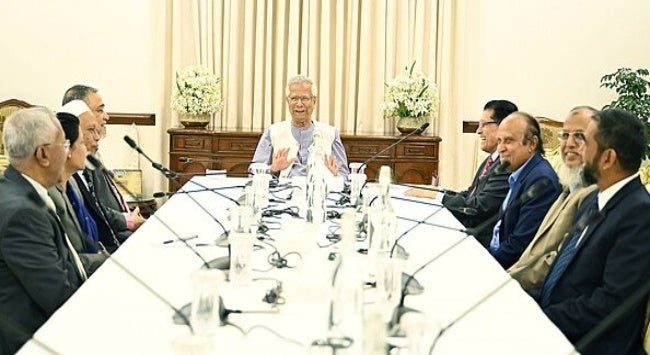
| Title: | Bangladesh’s Election and Referendum: Contesting Reform and Political Futures |
| Author/s: | Imran Ahmed, Muhammad Saad Ul Haque |
| Abstract: | Bangladesh’s election in February 2026 is taking place alongside a national referendum on constitutional reform, making it unlike a routine electoral contest. The vote is unfolding in a political environment that is marked by party exclusions, institutional tensions and competing visions of reform. Together, the election and referendum are shaping a moment that will influence how constitutional change proceeds, how political competition is organised and how the country’s future political system evolves. |
| Date: | 9 February 2026 |
| Read More |
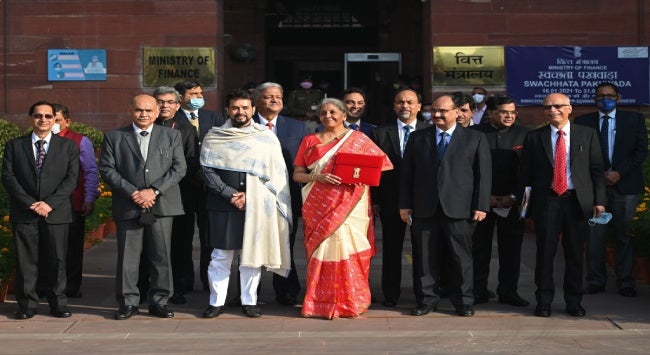
| Title: | Indian Budget 2026-27: Focus on Stability and Fiscal Prudence |
| Author/s: | Vinod Rai |
| Abstract: | The Indian Budget 2026-27, presented on 1 February 2026, can be seen as a fiscally prudent and strategically forward-looking roadmap for India’s macroeconomic trajectory as it preserves fiscal discipline, accelerates infrastructure investments and introduces tax simplification and targeted incentives designed to boost competitiveness and investment. |
| Date: | 3 February 2026 |
| Read More |
| Title: | Cricket, Politics and a Diplomatic Rift: Bangladesh’s T20 World Cup Withdrawal |
| Author/s: | Ronojoy Sen |
| Abstract: | After Bangladesh refused to play its matches in India in the upcoming Twenty20 World Cup, co-hosted by India and Sri Lanka, the International Cricket Council replaced Bangladesh with Scotland. It is a reminder that cricket cannot be divorced from politics, especially in South Asia. It is also a stark indication of the depths to which relations between India and Bangladesh have plunged. |
| Date: | 30 January 2026 |
| Read More |
| Title: | Historic India-EU Trade Deal: A New Strategic and Economic Alliance |
| Author/s: | Vinod Rai |
| Abstract: | India and the European Union (EU) have signed a historic free trade agreement after nearly two decades of negotiation. The deal is significant as it covers a market of over two billion people and a large share of global gross domestic product and trade. For India, it offers expanded exports, cheaper inputs and deeper integration into global value chains. For the EU, it secures market access in a fast-growing economy and strengthens strategic ties amid shifting global trade alignments. |
| Date: | 29 January 2026 |
| Read More |
| Title: | Easing India’s Curbs on Chinese Investment: Promise and Complexities |
| Author/s: | Ivan Lidarev |
| Abstract: | The brief examines India’s likely easing of restrictions on Chinese investment. It argue that the manner and pace of relaxation will be decisive to sustain the economic dimension of the recent thaw in China-India relations. Even so, Chinese investment is expected to increase only gradually at first. |
| Date: | 29 January 2026 |
| Read More |
| Title: | From Protest to the Polls: Nepal’s Parties Under Scrutiny |
| Author/s: | Puspa Sharma |
| Abstract: | In the aftermath of the youth protest in Nepal in September 2025, significant changes have occurred in Nepal’s political landscape. Although there have been changes in almost all the political parties, they have been significant in some and appear as continuity of the past in the others. How these have been perceived by the Nepali people will be clear after the upcoming general elections. |
| Date: | 20 January 2026 |
| Read More |
| Title: | When Wildfires Close Borders: Tatopani, Trade and Climate Risk |
| Author/s: | Harsh Mahaseth |
| Abstract: | The temporary closure of the Tatopani border following a massive wildfire in China’s Nyalam-Khasa corridor may seem like an isolated environmental incident. However, it exposes deeper vulnerabilities in Nepal-China trade. With the Rasuwagadhi crossing already closed after the July 2025 floods, Tatopani had become the main overland trade route, leaving hundreds of containers stranded and supply chains disrupted. The closure highlights Nepal’s heavy reliance on a few fragile Himalayan corridors and the power asymmetry in border management, as decisions on reopening are largely controlled by the Chinese side. Beyond immediate disruptions, the incident also highlights how climate volatility is becoming a structural factor in Himalayan connectivity, complicating trade diversification efforts and revealing the absence of institutionalised Nepal-China mechanisms to manage cross-border environmental risks. |
| Date: | 19 January 2026 |
| Read More |
| Title: | India’s BRICS Chairmanship in 2026: Leadership in Times of Global Uncertainty |
| Author/s: | Amit Ranjan |
| Abstract: | As the BRICS chair in 2026, India bears a significant responsibility to demonstrate leadership in navigating an increasingly uncertain global political environment. |
| Date: | 19 January 2026 |
| Read More |
| Title: | India’s Energy Security Challenge: Diversifying Crude Oil Imports |
| Author/s: | Amitendu Palit |
| Abstract: | Prices of India’s crude oil imports are increasing as the Iranian conflict intensifies. India needs to look for diversification options, including from the United States, Australia and Canada. |
| Date: | 19 January 2026 |
| Read More |
| Title: | Khaleda Zia’s Political Legacy: Rule, Confrontation and Polarisation |
| Author/s: | Imran Ahmed |
| Abstract: | Bangladesh’s first female prime minister, Khaleda Zia, died on 30 December 2025. A pivotal figure in the country’s political life since the early 1980s, she played a significant role in shaping Bangladesh’s two-party system and the trajectory of opposition politics. Her legacy, however, is inseparable from the deep polarisation that has defined Bangladeshi politics for decades. It was forged as much through prolonged confrontation with the Awami League and Sheikh Hasina as through her efforts to consolidate the Bangladesh Nationalist Party as a durable national opposition force. |
| Date: | 9 January 2026 |
| Read More |
| Title: | The Political Spillover of Sports: New Low in India-Bangladesh Ties |
| Author/s: | Amit Ranjan |
| Abstract: | Despite engagements on several issues, India-Bangladesh ties have touched a new low. The release of Bangladeshi bowler Mustafizur Rahman from the Indian Premier League 2026 edition has strained cricketing ties and created a new friction point between the two countries. |
| Date: | 7 January 2026 |
| Read More |

| Title: | Subsea Cables in the Indo-Pacific: Advancing Indo-French Cooperation |
| Author/s: | Anirudh Suri |
| Abstract: | India and France are at the cusp of a fruitful and productive partnership in the subsea cable domain by leveraging France’s industrial strength and technical expertise, and India’s dynamic market, strategic geography and investment appetite. |
| Date: | 6 January 2026 |
| Read More |
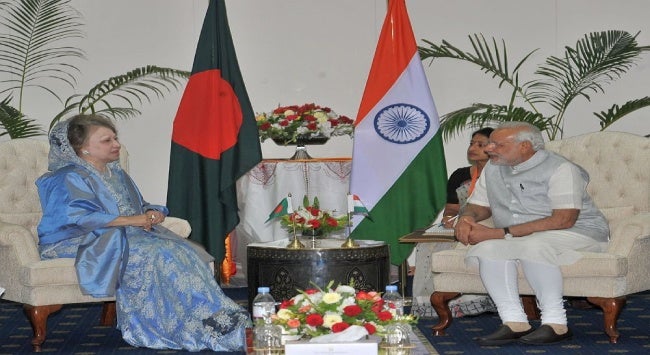
| Title: | Passing of Khaleda Zia: Relations with India and Regional Legacy |
| Author/s: | C Raja Mohan |
| Abstract: | The passing of Khaleda Zia and the political eclipse of Sheikh Hasina mark the end of an era in Bangladeshi politics and open the door to a generational transition with important domestic and regional consequences. As Bangladesh approaches elections amid deep domestic churn, New Delhi hopes to reset a relationship that has sharply deteriorated since the ouster of Hasina in 2024. |
| Date: | 5 January 2026 |
| Read More |
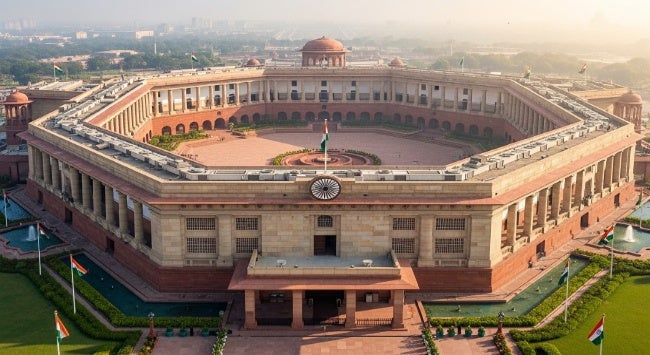
| Title: | Rushing Through Critical Legislations: Erosion of Parliamentary Scrutiny in India |
| Author/s: | Ronojoy Sen |
| Abstract: | The winter session of the Indian parliament witnessed important pieces of legislation being passed in haste and without any committee scrutiny. It confirmed a decade-long trend that has undermined the parliamentary committee system. |
| Date: | 5 January 2026 |
| Read More |
Load more