


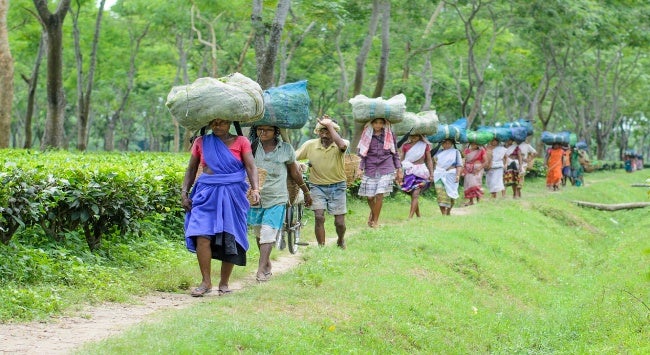
| Title: | Cash Transfers and Debt in Andhra Pradesh’s Tribal Areas |
| Author/s: | Diego Maiorano, Chakradhar Buddha, Upasak Das |
| Abstract: | Cash transfers have become one of the main instruments of social policy in India. Drawing on a survey of 1,181 households in the tribal areas of Andhra Pradesh, this paper examines how two of the state’s largest schemes, Rythu Bharosa and Jagananna Amma Vodi, have shaped the debt relations of those who received them. Households receiving both transfers borrow at less than half the rate of households receiving neither, and borrowers credit the money with helping them service their loans. Yet most remain indebted, and moneylenders remain by far the main source of credit. Widening formal credit and resolving land record problems would strengthen what the transfers achieve. |
| Date: | 19 October 2026 |
| Read More |
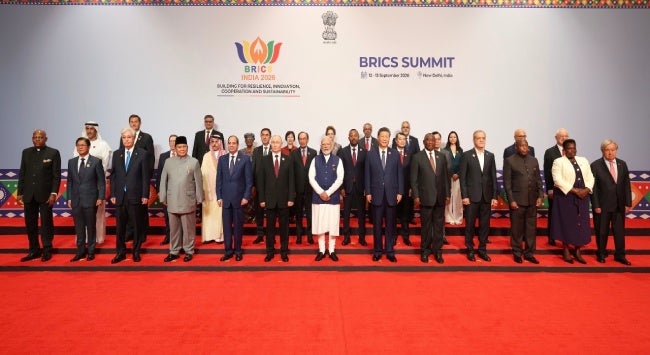
| Title: | BRICS Beyond the Declaration: Assessing the Significance of the New Delhi Summit |
| Author/s: | Vinod Rai |
| Abstract: | The BRICS Summit in New Delhi in September 2026 demonstrated the evolving significance of an expanded grouping whose members possess diverse political, economic and strategic interests. While the unanimous declaration reflected the possibility of consensus on global governance, security and development, the summit’s broader value lay in its bilateral engagements and commercial opportunities. Discussions on trade, investment, financial cooperation, technology, energy and institutional reform highlighted the potential for practical collaboration among emerging economies. The summit also provided avenues for dialogue between countries facing regional tensions. Its long-term relevance will depend on translating diplomatic consensus into implementable agreements, stronger institutions and tangible economic benefits for its diverse membership. |
| Date: | 23 September 2026 |
| Read More |
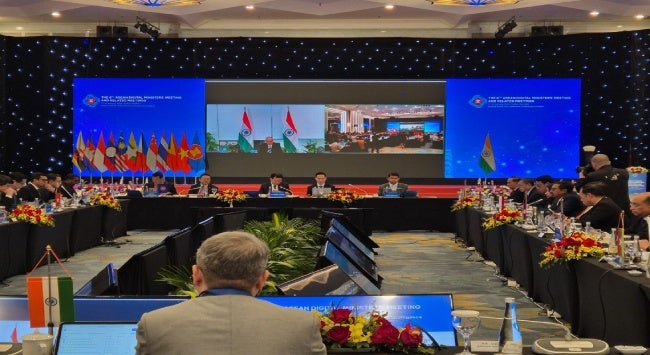
| Title: | ASEAN-India Digital Cooperation: Progress, but with Limited Ambition |
| Author/s: | Sandeep Bhardwaj |
| Abstract: | Digital cooperation between the Association of Southeast Asian Nations and India has made good progress in the last few years but remains constrained by limited scope and vision. |
| Date: | 10 September 2026 |
| Read More |
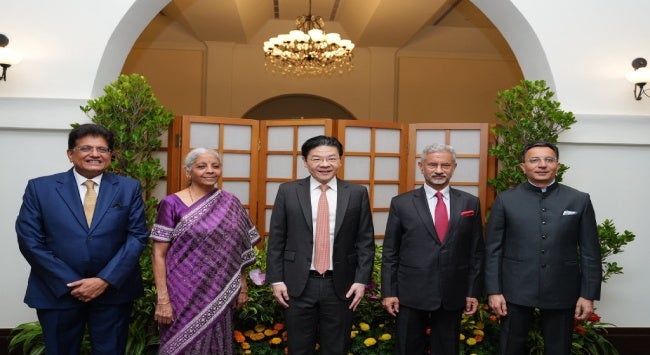
| Title: | India and Singapore: Partnership for an Aspirational India |
| Author/s: | Vinod Rai |
| Abstract: | The Fourth India-Singapore Ministerial Roundtable, held in Singapore on 20 August 2026, provided an important platform to review the progress of bilateral cooperation and identify new opportunities for collaboration. The discussions covered six key pillars of cooperation – advanced manufacturing, connectivity, digitalisation, healthcare and medicine, skills upgrading and sustainability – while also exploring emerging areas such as space, nuclear technology, cybersecurity and innovation. The discussions indicate that India and Singapore are moving towards a more practical, technology-driven and industry-oriented partnership, with an emphasis on translating existing agreements into concrete projects and capabilities. |
| Date: | 31 August 2026 |
| Read More |

| Title: | India’s Strategic Autonomy and the Politics of Distance from the West |
| Author/s: | C Raja Mohan |
| Abstract: | The idea of ‘strategic autonomy’ is widely seen as the essential ingredient of India’s foreign policy. It is invoked across academia, think tanks and the political class as the main driver for New Delhi’s choices on a variety of international issues. This paper traces the origin of strategic autonomy to the middle of the 2000s and sees it as a defensive formula devised to protect India’s freedom of action amid growing ties with the United States. |
| Date: | 21 August 2026 |
| Read More |

| Title: | Free or Fee-Based UPI? Balancing Access and Sustainability |
| Author/s: | Vinod Rai |
| Abstract: | India’s Unified Payments Interface (UPI) has transformed the country’s payment landscape by combining convenience, interoperability and zero-cost transactions. The zero-Merchant Discount Rate (MDR) model was instrumental in driving adoption, particularly among consumers and small merchants. However, as UPI has matured into critical national digital infrastructure, questions of financial sustainability, cybersecurity and continued investment have acquired greater importance. There is a case for a differentiated MDR on appropriate high-value commercial transactions. Preserving free person-to-person and small-value payments while selectively pricing commercial usage could reconcile financial inclusion with the long-term sustainability of India’s digital payment ecosystem. |
| Date: | 14 August 2026 |
| Read More |

| Title: | Some Right Moves, Many Wrong Ones of the RSP Government in Nepal |
| Author/s: | Puspa Sharma |
| Abstract: | With only four months in office, it is still too early to make a definitive assessment of the performance of Nepal’s Balendra Shah government. However, as the saying goes, ‘the morning shows the day’, the government’s early decisions and actions have inspired more concern than confidence. |
| Date: | 28 July 2026 |
| Read More |
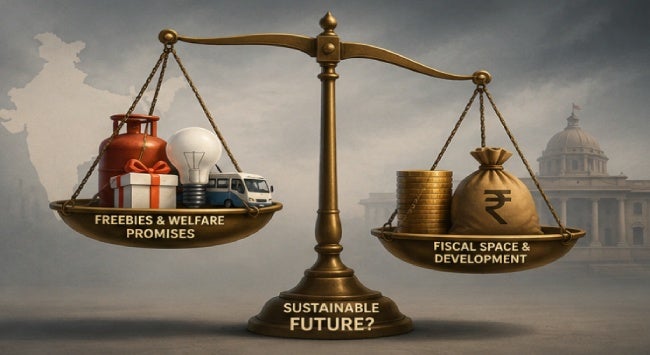
| Title: | Competitive Populism in Indian Elections: Freebies and the Fiscal Vulnerability of States |
| Author/s: | Vinod Rai |
| Abstract: | The recent assembly elections in four major states – Assam, West Bengal, Tamil Nadu and Kerala – have highlighted the relentless expansion of ‘freebies’ despite fiscal stress facing each of these states. Across political parties and ideological lines, manifestos resemble competitive announcements of subsidies, cash transfers and free services. The alarming feature is that these promises are being made for states already burdened with high debt, widening fiscal deficits and shrinking fiscal space. |
| Date: | 29 May 2026 |
| Read More |
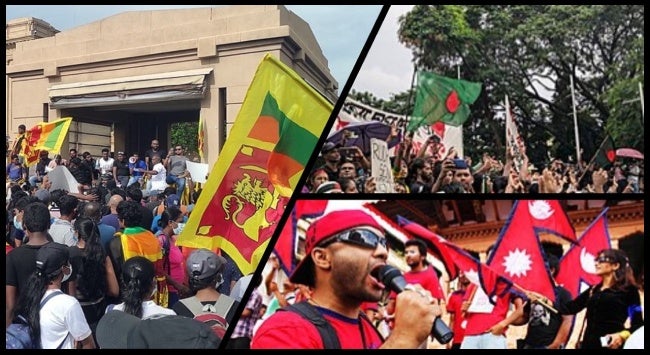
| Title: | Post-uprisings in South Asia: Decoding the Divergent Political Trajectories |
| Author/s: | Ratan Kumar Roy, Roshni Kapur |
| Abstract: | The election in Nepal in early March 2026 saw the Rastriya Swatantra Party (RSP) voted to power with a landslide victory over more established and older political actors such as the Nepali Congress, Nepali Communist Party and the Communist Party of Nepal (United Marxist-Leninist). The RSP’s victory has been attributed to its campaigning on issues of anti-corruption, weak rule of law and limited domestic job opportunities that prompted many, particularly the youth, to migrate overseas. This paper explores how the uprisings that unfolded in South Asia were driven by distinct national contexts and factors leading to different political trajectories. While Sri Lanka witnessed a return to elite-managed politics after the Aragalaya, Bangladesh and Nepal experienced transitional governments that sought to address the popular movement goals. |
| Date: | 22 May 2026 |
| Read More |
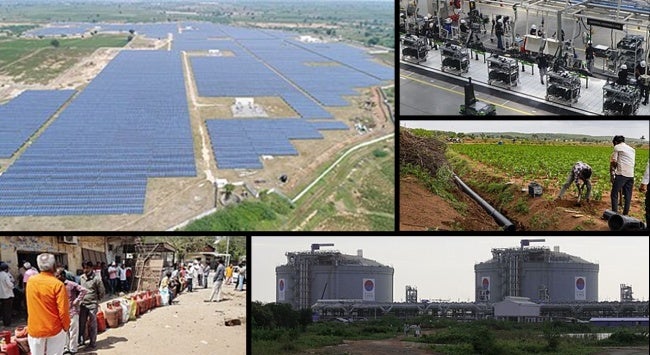
| Title: | The United States-Iran Conflict: Economic Implications on India |
| Author/s: | Vinod Rai |
| Abstract: | The ensuing United States-Iran conflict and the blockade of the Strait of Hormuz have created a huge economic challenge for India. The adverse impact on India’s energy security, particularly for petroleum and LPG has had diverse consequences along many sectors. Manufacturing, agriculture, civil aviation and power generation have suffered setbacks leading to lay- offs. The government has taken urgent steps for energy supply diversification, fiscal measures to minimise price increases but the pressure on the rupee and forex reserves continue. |
| Date: | 23 April 2026 |
| Read More |
| Title: | Test of the Dravidian Model: Tamil Nadu State Assembly Election |
| Author/s: | Narayan Lakshman |
| Abstract: | The 2026 assembly election in Tamil Nadu in India represents a watershed moment for the state, given its history of the Dravidian movement and its implied unique governance trajectory. This election comes at a time when the competitive space in the state has opened up to new parties and ideologies outside of the Dravidian model, raising the possibility of different political idioms, growth paradigms and redistributive agendas taking root amidst a changing socioeconomic milieu. Voting patterns on 23 April 2026 will also reveal how the values of voters of demanding accountable yet equitable governance from political leaders have transformed in recent years. |
| Date: | 20 April 2026 |
| Read More |

| Title: | From Victory to Responsibility: Can the RSP Deliver in Nepal? |
| Author/s: | Puspa Sharma |
| Abstract: | The Rastriya Swatantra Party’s (RSP) thumping victory in the recent elections in Nepal is also a huge responsibility bestowed on it by Nepalis. There are several challenges facing the RSP which it needs to manage with utmost care to deliver on its promises. |
| Date: | 17 March 2026 |
| Read More |
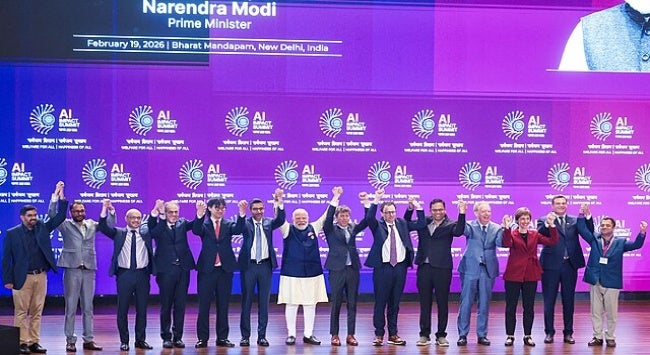
| Title: | India AI Impact Summit 2026: A Technological Turning Point |
| Author/s: | Vinod Rai |
| Abstract: | The India AI Impact Summit 2026, organised under the IndiaAI Mission by the Indian government of and the Ministry of Electronics and Information Technology, was the first summit in the series hosted by a Global South nation. The event drew delegations from over 80 countries, including about 20 heads of state and about 300,000 participants. With the theme of ‘AI for All’, the summit reflected India’s broader development philosophy and affirmed its resolve in becoming a leading country in shaping the artificial intelligence revolution. |
| Date: | 25 February 2026 |
| Read More |
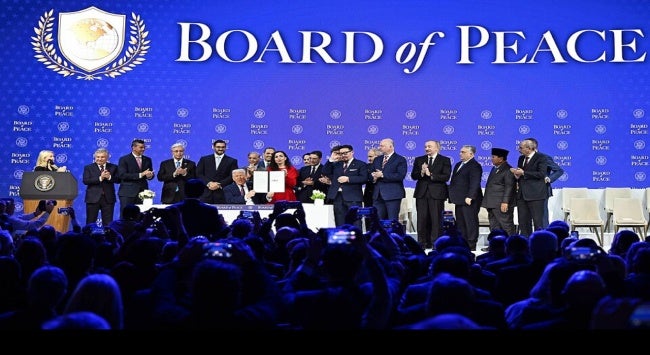
| Title: | Trump’s Board of Peace: Pakistan’s Strategic Calculus |
| Author/s: | Vinay Kaura |
| Abstract: | Pakistan’s participation in the United States (US)-led Board of Peace (BoP), a controversial geopolitical project, is an indication of Pakistan’s desire to gain diplomatic visibility and international legitimacy. Notwithstanding its stated mandate of resolving global conflicts, the very structure of the BoP concentrates authority in the hands of US President Donald Trump, leaving Pakistan with practically no control over its functioning and decision-making. Deeper commitment to what appears to be the US hegemonic project might jeopardise Pakistan’s long-term strategic relationship with China and also undermine its future aspirations to play a prominent role in the Middle East. |
| Date: | 23 February 2026 |
| Read More |

| Title: | Five Years after the Galwan Clashes: Reassessing India’s Indian Ocean Strategy |
| Author/s: | Sandeep Bhardwaj |
| Abstract: | The Indian Parliamentary Committee on External Affairs recently concluded a year-long assessment of India’s Indian Ocean Strategy. The document, combined with insights from budget documents, reveals the change in India’s maritime posture since 2020. |
| Date: | 9 February 2026 |
| Read More |

| Title: | Measuring India’s Economic Growth: Evidence Beyond the Headline GDP |
| Author/s: | Diego Maiorano |
| Abstract: | While India’s reported latest gross domestic product (GDP) figures suggests that the country is in an economic ‘sweet spot’ – high growth and low inflation – many analysts are sceptical about these headline figures. Vital metrics, including record-low foreign direct investment, stagnant manufacturing employment and a mismatch between corporate revenues and GDP growth, diverge from headline growth. Technical issues, specifically a GDP deflator skewed by low wholesale prices and methodological revisions dating back to 2011, have triggered international scepticism, evidenced by the International Monetary Fund’s recent downgrade of India’s national account statistics to ‘C’ grade. This suggests that official data may systematically overstate economic health, even if few doubt that India is indeed growing fast. However, restoring the credibility of statistical agencies is essential to ensure that policy interventions are based on reality rather than statistical constructions. |
| Date: | 23 January 2026 |
| Read More |
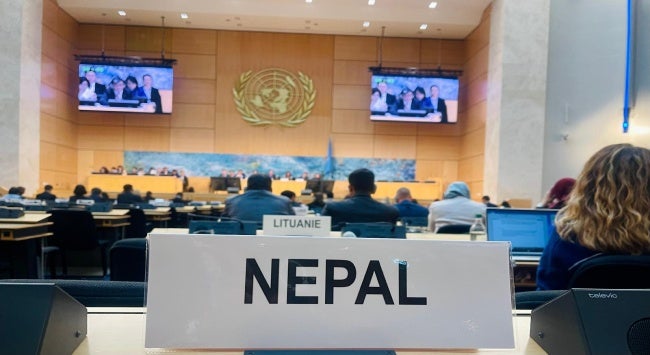
| Title: | Nepal and the Universal Periodic Review: Between Commitments and Consequences |
| Author/s: | Harsh Mahaseth |
| Abstract: | In December 2025, Nepal presented its third cycle of the Universal Periodic Review (UPR) before the United Nations Human Rights Council, projecting substantial compliance with the recommendations it accepted in 2022. The government highlighted progress in strengthening the National Human Rights Commission, advancing the criminalisation of torture, addressing discrimination and improving civil and birth registration systems. Yet this narrative has been sharply contested by civil society and human rights defenders, who point to persistent gaps between commitments and practice. As Nepal approaches its fourth cycle of the UPR review in January 2026, these tensions raise wider questions about performative compliance and the limits of international human rights accountability. |
| Date: | 15 January 2026 |
| Read More |
Load more