


Summary
It is too early to conclude that a Bharatiya Janata Party government in West Bengal would enable India and Bangladesh to satisfactorily resolve and manage the issues that persisted during recently-defeated West Bengal Chief Minister Mamata Banerjee’s tenure.
In the recently concluded assembly election in the Indian state of West Bengal, the Bharatiya Janata Party (BJP) defeated the Mamata Banerjee-led Trinamool Congress (TMC) government. West Bengal’s Chief Minister Mamata Banerjee refused to concede defeat, alleging that the TMC had been “defeated not by public mandate but by conspiracy”. To pave the way for the new government, West Bengal Governor R N Ravi dissolved the state’s legislative assembly, and on 9 May 2026, Suvendu Adhikari, a former TMC leader, took oath as the state’s first BJP chief minister in the state.
Bangladesh welcomed the election of the BJP government in West Bengal. Azizul Baree Helal, the Bangladesh Nationalist Party’s (BNP) Information Secretary, called Mamata an “impediment to establishing the Teesta Barrage”, hoping that the Teesta River deal will now be “implemented”. Under an interim deal agreed in 2011, from December to March, Bangladesh would receive 37.5 per cent of the Teesta River’s waters, India would get 42.5 per cent, and 20 per cent would be reserved for environmental purposes. Mamata’s position was that sharing the agreed Teesta River’s waters means “depriving northern West Bengal of even drinking water”.
Mamata was also unhappy with India’s decision to renew the Ganga/Ganges Waters Treaty (GWT). As India and Bangladesh are in the process of rebuilding their ties after months of strained relations, Bangladesh’s Foreign Minister Khalilur Rahman, in an interview with NDTV, said, “…the Ganges water-sharing agreement – based on fairness and climate resilience – will be the first test of fixing bilateral ties”. In early May 2026, a few days before ‘Farakka Day’, which commemorates the long march led by Maulana Abdul Bhashani in 1976 to protest the Farakka Barrage in India, Dhaka decided to build the Padma Barrage. The Ganga is known as Padma in Bangladesh. It covers around 37 per cent of Bangladesh’s land area, spanning 26 districts and 163 sub-districts. The barrage is expected to revive five major river systems, store about 2,900 million cubic metres of water in the Padma River, irrigate 2.88 million hectares and increase fish production by 2.34 million tonnes.
Decisions on the Teesta River and the GWT may appear more attainable now that the BJP is in power at both the Union and state levels. However, in addressing the Teesta River issue, the Adhikari government will inevitably have to take into account West Bengal’s declining per capita water availability. Moreover, evolving bilateral dynamics may shape the course of future water negotiations and arrangements between the two sides.
For decades, the BJP has consistently raised concerns over infiltration and “illegal” migration in Indian states bordering Bangladesh. Its West Bengal election manifesto included the slogan ‘Detect, Delete and Deport’ to “prevent illegal infiltration and address silent demographic invasion”. Following the BJP’s victory in West Bengal, the issue prompted a sharp exchange between India and Bangladesh. The BNP’s official Facebook page posted Khalilur Rahman’s statement, stating, “Bangladesh will take action if push-in incidents occur amid the change of power in West Bengal”. Then, Humayun Kabir, the foreign affairs adviser to the Bangladesh’s Prime Minister Tarique Rahman, told reporters, “If people are killed and pushed across the border…we will not sit and watch”. Meanwhile, Randhir Jaiswal, spokesperson of India’s Ministry of External Affairs, said, “Over the past few years, there have been more than 2,860 such cases in which we have approached Bangladesh for nationality verification, and all these matters are still pending there.”
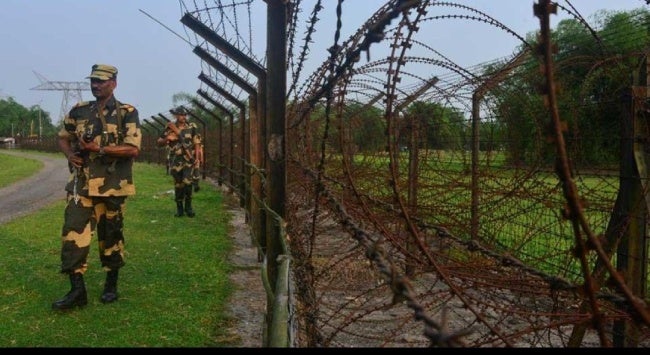
The BJP’s West Bengal manifesto also called for the fencing of the India-Bangladesh border. The two countries share a 4,096.7-kilometre-long border, out of which 3,232.218 km has been fenced. A length of 864.482 km remains unfenced, including 174.514 km that is not feasible for fencing. Five Indian states border Bangladesh – West Bengal (2,216.7 km), Assam (263 km), Meghalaya (443 km), Tripura (856 km) and Mizoram (318 km). At the end of April 2026, India’s Border Security Force (BSF) floated the idea of releasing crocodiles and venomous snakes into riverine stretches along the Bangladesh border to prevent people from crossing into India via the river route. After Adhikari announced the transfer of land to the BSF within 45 days to fence the border with Bangladesh, Kabir said that the people and the government of Bangladesh “are not afraid of barbed wire….Where we need to speak, we will”.
Besides severe anti-incumbency, the Hindu consolidation in favour of the BJP was a major deciding factor in West Bengal’s election. Hindu Khatre Mein (Hindus are in danger) narrative, alleging Mamata of “minority appeasement”, which could create a Bangladesh-like situation for the Hindus in West Bengal, was effective, particularly in constituencies where memories of Partition and migration do shape people’s political opinion. The socio-political situation in West Bengal may have a ripple effect in Bangladesh, where the Hindu minorities have faced a series of attacks after ousted Bangladesh Prime Minister Sheikh Hasina left the country in August 2024.The tense social situation may bolster radical groups in the region.
As the governments in both Bangladesh and West Bengal are newly in office, they will require time to define the contours of their engagement. In this context, the role of Dinesh Trivedi, a seasoned West Bengal politician and India’s incoming High Commissioner to Bangladesh, will be particularly significant. The central challenge for the two sides will be to manage their contentious issues effectively and prevent them from undermining broader bilateral relations.
. . . . .
Dr Amit Ranjan is a Research Fellow at the Institute of South Asian Studies (ISAS), an autonomous research institute at the National University of Singapore (NUS). He can be contacted at isasar@nus.edu.sg. The author bears full responsibility for the facts cited and opinions expressed in this paper.
Pic Credit: X
-
 More From :
-
 Tags :
-
 Download PDF