


Pakistan-Singapore Relations at 60:
Turning Friendship into Economic Ties
Imran Ahmed
23 September 2026Summary
The 60th anniversary of diplomatic relations between Pakistan and Singapore in 2026 highlights a relationship that has remained friendly but economically modest. Political goodwill has not translated into the deeper economic partnership that both countries have periodically sought. The challenge is, therefore, to translate a stable political relationship into more sustained economic cooperation.
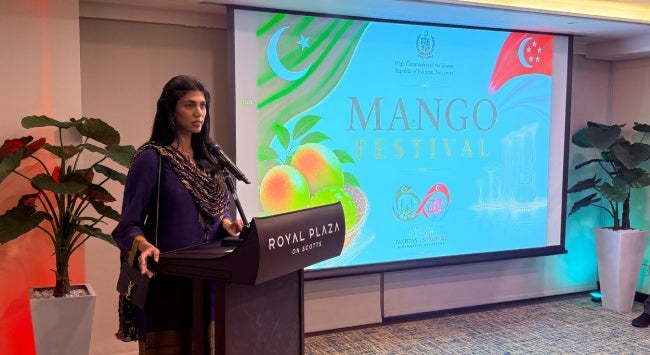
Pakistan and Singapore marked the 60th anniversary of diplomatic relations in August 2026 with an exchange of letters between their prime ministers and foreign ministers. The occasion was accompanied by cultural events in Singapore, including a Qawwali performance and a mango festival. The anniversary, however, produced no major new economic agreement or business initiative. This modest commemoration contrasts with the ambitions that shaped the relationship two decades earlier when Pakistan sought closer economic ties with Singapore as part of its broader ‘Vision East Asia’ policy.
That earlier period produced some of the most substantial initiatives in the history of the relationship. Pakistan and Singapore began negotiations on a free trade agreement (FTA) in 2005. The talks eventually covered goods, services, investment and government procurement, and had reached a third round by May 2006. Four rounds were ultimately held, but negotiations stalled. Pakistan attempted to revive the process in 2011. Within Pakistan, there were differing views over the tariff reductions sought by Singapore. Parts of Pakistan’s domestic sector feared that reducing tariffs on imports would widen the trade deficit and hurt local industry, while others saw potential benefits from greater access to Singapore’s services sector. The negotiations did not resume, and Pakistan’s Ministry of Commerce still lists no FTA or preferential trade agreement with Singapore.
Singaporean companies nevertheless made significant attempts to enter the Pakistani market during this period. Temasek’s Asia Financial Holdings acquired a 25 per cent stake in NIB Bank in 2005 and increased its holding to more than 70 per cent later that year. Temasek reportedly invested around US$540 million (S$689.4 million) in NIB but the bank subsequently suffered substantial losses. Singapore’s Singtel also sought to enter Pakistan’s telecommunications sector in 2005 when it bid for a 26 per cent stake and management control of Pakistan Telecommunication Company Limited. It lost the privatisation contest to Etisalat of the United Arab Emirates, which bid approximately US$2.6 billion (S$3.3 billion), compared with Singtel’s US$1.17 billion (S$1.49 billion).
The experience of PSA International at Gwadar provides another example of the difficulties encountered by major Singaporean investments in Pakistan. Pakistan and PSA signed a 40-year concession agreement in February 2007 to operate Gwadar Port. The project subsequently encountered problems over the transfer of land, and the road and rail links needed to support the port remained underdeveloped. PSA eventually abandoned the project and cited Pakistan’s failure to meet its obligations under the agreement.
More recent developments reinforce these concerns. Singapore-based Wilmar International, which holds around 42 per cent of Pakistan’s Unity Foods, recognised a loss of US$150 million (S$191.5 million) related to the investment in 2026. The investment faced further uncertainty after Pakistan’s Federal Investigation Agency filed a case against current and former Unity Foods officials over alleged financial irregularities. The case remains before Pakistani courts. These experiences do not mean that Singaporean companies have disappeared from Pakistan. Singaporean companies nevertheless retain a commercial presence in Pakistan. In 2025, Pakistan’s competition regulator approved Singapore-based BBE D’s acquisition of a majority stake in Pakistan’s Euro Gas, which intends to enter the country’s liquefied natural gas sector.
Trade has continued but without developing into a major pillar of bilateral relations. Pakistan has consistently run a substantial trade deficit with Singapore. This has risen steadily from US$643 million (S$820.9 million) in 2019 to just over US$1 billion (S$1.27 billion) in 2023. Bilateral trade stood at approximately US$1.19 billion (S$1.51 billion) as of January 2025. Singapore has recently identified easier trade procedures, digital finance, the digital economy and capacity building as areas for greater cooperation. Pakistani officials have highlighted financial technology and halal products. In a message marking Singapore’s National Day in August 2026, President Asif Ali Zardari identified maritime and logistics connectivity, urban planning and vocational training as areas with potential for greater bilateral cooperation. Pakistan has also viewed Singapore as a potential gateway to Southeast Asia. During a visit in 2022, then Foreign Minister Bilawal Bhutto Zardari linked closer relations with Singapore to Pakistan’s efforts to reach the markets of the member states of the Association of Southeast Asian Nations. These ambitions have so far produced relatively few concrete bilateral initiatives.
Despite the difficulties in building a stronger economic partnership, political relations have remained stable, with Singapore maintaining diplomatic engagement with successive Pakistani governments. The two countries established bilateral political consultations in 2004. The most recent consultations were held in January 2022. Cooperation has also extended beyond formal diplomacy. Singapore provided humanitarian assistance following major disasters in Pakistan, including a reconstruction project following the devastating earthquake in 2005.
With Pakistan and Singapore entering their seventh decade of diplomatic relations, the question is what might give the relationship greater substance. The experience of the past two decades suggests that identifying new areas for cooperation is not enough. A revival of trade negotiations or new investment initiatives would provide clearer evidence that the relationship is moving beyond its current modest trajectory.
. . . . .
Dr Imran Ahmed is a Research Fellow at the Institute of South Asian Studies (ISAS), an autonomous research institute at the National University of Singapore (NUS). He can be contacted at iahmed@nus.edu.sg. The author bears full responsibility for the facts cited and opinions expressed in this paper.
Pic Credit: Pakistan Showcases World-Renowned Mangoes in Singapore to Mark 60 Years of Diplomatic Relations
-
 More From :
-
 Tags :
-
 Download PDF