


The Indus Waters Treaty:
Arbitration, Legitimacy and Changing Realities
Amit Ranjan
16 September 2026Summary
The Court of Arbitration has issued an Award and Order in the cases concerning the Indus Waters Treaty brought by Pakistan. However, India has rejected the proceedings and questioned the Court’s legitimacy. While cooperation over transboundary rivers was previously regarded as a pragmatic and reasonable approach, the political circumstances have since changed significantly.
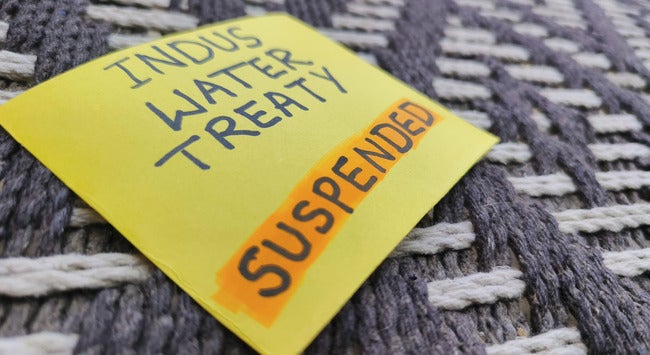
On 31 August 2026, the Court of Arbitration (CoA) at The Hague issued an Award on the Status of the Indus Waters Treaty (IWT) and an Order on Interim Measures regarding the 850 megawatt Ratle Hydro-Electric Plant (RHEP) on the Chenab River. The Court said that India’s decision on “abeyance” of the IWT, after the terror attack in Pahalgam in Jammu & Kashmir in April 2025 in which 26 tourists were killed, “was not permissible under the Treaty or other applicable rules of international law”. The Court prohibited India from working on the RHEP dam wall and raising the power intake structure above certain levels. The restrictions will remain in place for 90 days after the neutral expert (NE) issues a final decision, which is expected by July 2027. However, the Court rejected Pakistan’s “own risk principle” and found the measures requiring India to comply with the IWT unnecessary, as their application is addressed in the Treaty Status Award.
In August 2016, Pakistan, under Article IX and Annexure G of the IWT, requested the World Bank for a CoA, while two months later, India requested an appointment of an NE under Article IX and Annexure F to the IWT on the matter of the Kishanganga Hydro-Electric Plant and the RHEP. After a “pause” on appointments, in 2022, the World Bank empanelled the CoA under Professor Sean D Murphy and Michel Lino was appointed as the NE. India stayed away from the CoA’s proceedings from the beginning and stopped attending the NE’s meeting after unilaterally suspending the IWT in 2025.
New Delhi mainly argued that the conditions under Article IX of the IWT were not satisfied, so the constitution of a Court was illegitimate With India’s absence, Pakistan, in accordance with the procedure established in Paragraphs 4 and 6 of Annexure G of the treaty, selected its quota of arbitrators. The remaining three umpires (as arbitrators are also known) were appointed by drawing a lot in accordance with Paragraph 9 and Appendix to Annexure G of the IWT, and the President of the World Bank, the President of Imperial College of Science, Technology and Medicine, and the Chief Justice of the United States (US) were selected as appointing authorities.
Paragraph 23 of Annexure G to the IWT states that “ any Award rendered in accordance with the provisions of this Annexure in regard to a particular dispute shall be final and binding upon the Parties with respect to that dispute.” Earlier, in 2023, on India’s jurisdictional question, the Court unanimously held that it is competent to decide the matter initiated by Pakistan. Subsequently, the Court provided a general interpretation of the IWT in August 2025, issued a decision on Pakistan’s request for clarification of the treaty in November 2025 and issued an award on maximum pondage in May 2026. India rejected these and current ruling as well.
India’s position on the tribunal draws parallels to China’s stand. In 2016, China raised questions on the “legitimacy” and “jurisdiction” of the Arbitral Tribunal at The Hague that delivered an award in the South China Sea arbitration case, “unilaterally initiated” by the Philippines under Annex VII to the United Nations Convention on the Law of the Sea. China did not participate in the proceedings of the court. Ten years after the judgment, reacting to a joint statement issued on 12 July 2026, by the US, the Philippines, Australia, Canada, Estonia, Germany, Italy, Japan, Latvia, Lithuania, New Zealand, Romania, Slovenia and the United Kingdom, on the tribunal’s order, China maintained that “the “arbitration” violated fundamental principles of international law, including state consent and pacta sunt servanda [agreements must be kept]”. The statement added that the award had “…exacerbated tensions in the region and provided a pretext for external forces to intervene and destabilize the South China Sea”.
Although the CoA cannot compel a state to participate in its proceedings or comply with its order, its ruling can be used by a party or parties to seek diplomatic support from like- minded states. In the case of the IWT, Pakistan has issued a nuclear threat and raised the matter at international forums, including at the United Nations and at the recently concluded Shanghai Cooperation Organisation summit. India has warned Pakistan of “painful consequences” to any military misadventure, and Indian diplomats have underlined that Pakistan has violated the “spirit of the treaty” by imposing war and terror attacks in India, and rejected the Indian demand to discuss modifications to the IWT.
In 1960, the IWT, as its preamble mentions, was signed “in a spirit of goodwill and friendship”. However, Michel observes that the treaty is an example of “mutual distrust”. The distrust largely persisted after the IWT was signed; yet the treaty remained in force because the upper riparian felt it was reasonable to cooperate. The thinking and the nature of India-Pakistan ties have changed now. Bilateral relationship has deteriorated significantly since the 2025 Pahalgam terror attack.
The latest ruling highlights the growing gap between the legal framework of the IWT and the political realities of India-Pakistan relations. While the treaty provides mechanisms for dispute resolution, their effectiveness ultimately depends on the parties’ willingness to cooperate.
. . . . .
Dr Amit Ranjan is a Research Fellow at the Institute of South Asian Studies (ISAS), an autonomous research institute at the National University of Singapore (NUS). He can be contacted at isasar@nus.edu.sg. The author bears full responsibility for the facts cited and opinions expressed in this paper.
Pic Credit: Shutterstock
-
 More From :
-
 Tags :
-
 Download PDF