


Summary
The Election Commission of India is facing scrutiny due to a media report that has exposed disagreements among the three election commissioners on the controversial Special Intensive Review of electoral rolls. The opposition parties have called for the resignation of the chief election commissioner.
Over the past few days, the Election Commission of India (ECI) has been in the eye of a storm. There had already been questions around the ongoing Special Intensive Review (SIR) which began in June 2025 in Bihar and has struck over 130 million names from the electoral rolls. However, a media report on disagreements among the three election commissioners has increased scrutiny of the panel’s functioning and the role of the chief election commissioner (CEC) Gyanesh Kumar.
The media investigation has revealed that questions about the SIR were raised on several occasions over the past 10 months by two of the three election commissioners, Sukhbir Singh Sandhu and Vivek Joshi. According to the report, the objections related to “new voter registration, deletion and restoration of voters in the rolls; filing of appeals against orders restoring voters in the SIR process; and the custody, and security, of the entire electoral roll itself.” In one instance, Joshi and Sandhu apparently wrote separately to the Union cabinet secretary complaining about changes that removed oversight in the ECI’s information technology software for the electoral rolls. In addition, according to the investigation, before 9 September 2026, the CEC and the two other commissioners had not had a full meeting in four months.
Since its founding as a constitutional body under Article 324 in 1950, until 1993, the ECI had one election commissioner. However, the Narasimha Rao government in 1993 appointed two additional commissioners, partly to rein in then CEC, T N Seshan, who had transformed the ECI into a powerful body that brooked no interference from the government. Under the new rules, the CEC was the first among equals and did not have the power to take decisions unilaterally. A 2023 legislation made a panel comprising the Prime Minister, Union Home Minister and Leader of Opposition (LoP) responsible for the selection of election commissioners, effectively handing over his appointment to the government of the day. In fact, as LoP, Rahul Gandhi of the Congress had in 2024 opposed the elevation of Kumar to the CEC.
Of the concerns raised by the commissioners, three are perhaps of greater importance. First, in July 2026, Form 6, which every adult citizen had to fill to become a voter, was amended to include a question linking it to the SIR. It asked if new voters or their parents/ grandparents existed in the “electoral roll of last SIR”. Applicants could not proceed further without answering it. The change had happened despite Joshi noting, and Sandhu concurring, that Form 6 could not be changed without the government amending the rule. Second, there was a move to centralise the voter database which restricted the statutory rights of designated field officials in the states to access it for updating voter lists. Third, in West Bengal, where the SIR process was most controversial, the ECI itself filed appeals against 1.6 million voters in the state whom court-appointed officers had found eligible for inclusion in the rolls.
Since the revelations, the ECI and CEC have embarked on a damage control exercise. On 26 September 2026, the ECI issued a note on decisions taken at a full meeting. It presented a united front with a photograph of the CEC and the two other commissioners accompanying the note. It clarified, among other things, that for all commission meetings, the “agenda will be circulated in advance and minutes will be issued”. This could be read as a tacit admission that this procedure might not have been followed in the past, something that had been raised by the two election commissioners. There was another clarification regarding Form 6, which according to the note, the Supreme Court had “upheld”. However, following the meeting, the controversial amendment to the form was removed from the ECI portal.
The revelations against the ECI and what many see as further proof of the flawed SIR process have prompted opposition protests and calls for action against the CEC. The only way to remove Kumar is through an impeachment which is not only complicated but also an option that the opposition lacks numbers to push through. An earlier impeachment notice was rejected in the lower house of parliament, and one is pending in the upper house. Instead, opposition parties, including the Congress, are planning to hit the streets in protest. The youth-led Cockroach Janta Party (CJP), fresh from its success in getting Dharmendra Pradhan to resign as education minister, has also stepped into the fray. The movement’s founder, Abhijeet Dipke, has announced that the CJP will begin protests in Mumbai on 2 October, Mahatma Gandhi’s birthday. The protests will culminate in Delhi’s Jantar Mantar, the site of the CJP’s protests against Pradhan. The CJP is demanding criminal action against Kumar and his resignation. The Supreme Court, which has largely backed the SIR, has agreed to hear a petition seeking Kumar’s suspension.
Irrespective of the impact of these protests, the negative fallout of the SIR and the media reports have hurt the credibility of the ECI. The ECI has traditionally been one of the more trusted institutions in India. However, even before the SIR and Kumar took over as CEC, the ECI’s reputation had dipped. CSDS-Lokniti surveys have found that in 2019, 51 per cent of voters trusted the ECI to a “great extent”. This dropped dramatically in 2024 to 28 per cent. Even in the unlikely scenario that Kumar steps down, the ECI’s credibility will take longer to restore.
. . . . .
Dr Ronojoy Sen is a Senior Research Fellow and Research Lead (Politics, Society and Governance) at the Institute of South Asian Studies (ISAS), an autonomous research institute at the National University of Singapore (NUS). He can be contacted at isasrs@nus.edu.sg. The author bears full responsibility for the facts cited and opinions expressed in this paper.
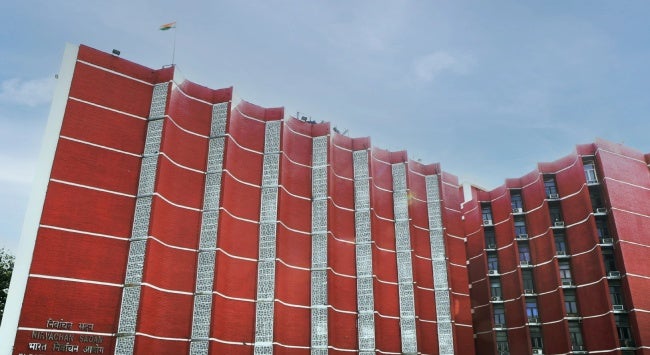
Pic Credit: About ECI | Election Commission of India | Election Commission of India
-
 More From :
-
 Tags :
-
 Download PDF