


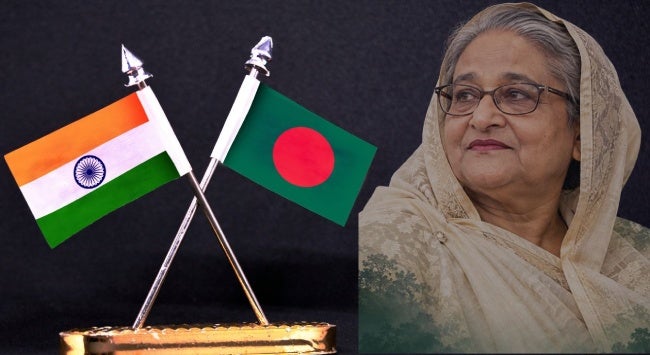
Bangladesh-India Relations:
Political Strain and Enduring Interdependence
Imran Ahmed, Sheikh Muzzammil Hussen
1 October 2026Summary
Bangladesh-India relations remain strained by the dispute over Sheikh Hasina but shared interests in water, energy and trade continue to drive the need for bilateral engagement. Bangladesh’s efforts to diversify its foreign relations must, therefore, coexist with its continued interdependence with India even as political differences complicate cooperation.
Bangladesh Prime Minister Tarique Rahman has still not made a visit to India. On 17 September 2026, officials from both countries had reportedly resumed talks on a visit in November 2026, with the trade and the Ganges water treaty on the draft agenda. This follows two difficult months. Plans for a visit on 23 and 24 August 2026, with a ceremonial welcome at Rashtrapati Bhavan, fell through. Rahman then did not attend the BRICS summit in New Delhi on 12 and 13 September 2026. Dhaka noted that the invitation was addressed to the Chair of the Bay of Bengal Initiative for Multi-Sectoral Technical and Economic Cooperation, not to Rahman as prime minister. On 15 September 2026, India’s foreign ministry spokesperson, Randhir Jaiswal, said Dhaka had not responded to the invitation for a bilateral visit.
The main obstacle to a visit remains Sheikh Hasina. Dhaka has continued to press India to extradite the ousted prime minister while India says the request remains under examination through its legal processes. The dispute took on another dimension on 5 August 2026 when Hasina spoke by video to journalists in New Delhi, two years after she fled Bangladesh. Dhaka said the event had spoiled the atmosphere for the visit. Diplomatic sources told The Daily Star that the visit depends on an Indian assurance that Hasina will not use Indian soil for activities against Bangladesh. India, however, has avoided publicly addressing these concerns directly. On 22 August 2026, External Affairs Minister S Jaishankar said only that ties must meet the “test of mutual interest”.
While the Hasina dispute has stalled engagement between the two prime ministers, it has not brought the wider bilateral relationship to a standstill. In February 2026, Lok Sabha Speaker Om Birla attended Rahman’s swearing-in and delivered a letter from India’s Prime Minister Narendra Modi inviting him to India. On 8 April 2026, Foreign Minister Khalilur Rahman met Jaishankar in New Delhi. India said it would ease visa restrictions while Dhaka asked for more diesel and fertiliser. India subsequently appointed former minister Dinesh Trivedi as High Commissioner to Bangladesh, a rare appointment from outside the Indian foreign service, and tourist visa applications for Bangladeshis resumed on 28 June 2026 after a suspension of nearly two years.
However, this practical engagement has its limits. Even where the two governments have agreed on a course of action, implementation has proved difficult. The two sides agreed to return suspects detained in India over the killing of student leader Sharif Osman Hadi under the extradition treaty. The agreement suggested that the two governments could still cooperate through the bilateral extradition framework despite their dispute over Hasina. The suspects, however, remain in India as they face legal proceedings there, and by August 2026, Dhaka was again calling for their return.
Dhaka has, meanwhile, continued to diversify its external relationships, expanding ties with China and other partners. This has given Bangladesh more diplomatic options, but it cannot remove the forms of interdependence with India created by geography. And water is the clearest example. The Ganges Water Sharing Treaty was signed in 1996 for 30 years and expires in December 2026. Bangladesh is seeking a new agreement with a guarantee clause to protect its share of water during the dry season. Dhaka has received strong assurances on the future of the treaty but the two sides have yet to agree on a replacement. The issue is particularly important because Bangladesh and India share 54 rivers while the Ganges remains the only one covered by a formal water-sharing agreement. The long-running failure to reach an agreement over the Teesta shows how difficult these negotiations can be.
Energy provides another example of this interdependence. Bangladesh has faced serious gas shortages this year, with supply falling well below demand after disruptions to its liquefied natural gas imports and infrastructure. India provides Bangladesh with another source of energy through the cross-border Friendship Pipeline. Bangladesh is set to import 180,000 tonnes of diesel from India during 2026 and sought an additional 50,000 tonnes in March 2026.
While water and energy require cooperation, trade restrictions and border disputes give both governments further reasons to negotiate. In April 2025, India withdrew a transhipment facility that allowed Bangladeshi exports to reach third countries through India. It subsequently restricted garment imports to two seaports and required certain jute-based goods to enter India exclusively through Nhava Sheva. India’s efforts to extend fencing along the shared border have also caused friction with Dhaka. Bangladesh has accused India of pushing people across the border without first verifying their nationality through diplomatic channels.
The challenge for both governments is to prevent their political differences from obstructing cooperation on shared concerns. The proposed November 2026 visit, if it takes place, would provide an opportunity to address some of these issues. The Ganges treaty’s expiry in December 2026 gives both sides a particularly pressing reason to negotiate. However, the relationship will require more than progress on individual disputes. Bangladesh’s efforts to diversify its foreign relations will have to coexist with its continued interdependence with India at least in areas such as water, energy, borders, and trade.
. . . . .
Dr Imran Ahmed is a Research Fellow at the Institute of South Asian Studies (ISAS), an autonomous research institute at the National University of Singapore (NUS). He can be contacted at iahmed@nus.edu.sg. Mr Sheikh Muzzammil Hussen is a Research Intern in the same institute. He can be contacted at isav47@partner.nus.edu.sg. The authors bear full responsibility for the facts cited and opinions expressed in this paper.
Pic Credit: Shutterstock
-
 More From :
-
 Tags :
-
 Download PDF