


Summary
The recent India-United States crisis has led to heightened mistrust and strained bilateral relations. Nevertheless, New Delhi’s strategic ambitions and security concerns continue to anchor its partnership with Washington.
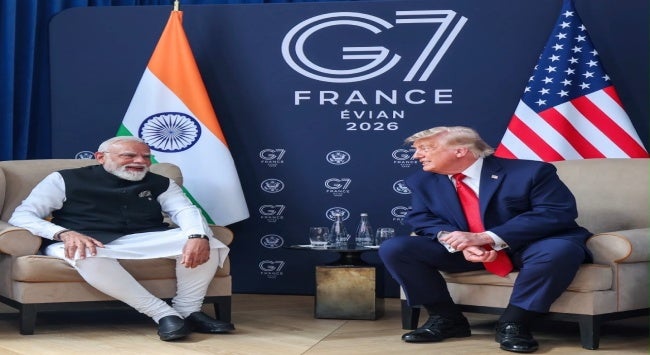
New Delhi and Washington are moving to repair their relationship after months of tense diplomatic crisis over tariffs. The two sides reached an interim trade framework in February 2026 and have announced that a final trade deal is close to conclusion. The United States (US) Secretary of State Marco Rubio visited India in May 2026 and US President Donald Trump met with Indian Prime Minister Narendra Modi at the G7 Summit in Paris in June 2026. While bilateral tensions remain, both countries have reaffirmed their commitment to strengthening their important strategic partnership.
The reconciliation is unsurprising. Since the beginning of the crisis, most stakeholders operated under the assumption that the relationship would bounce back sooner rather than later. The India-US partnership has demonstrated durability in the past. For instance, it overcame the diplomatic crisis of 2013-14 without any apparent long-term scars. In fact, despite the crisis, India has moved closer to the US, at least in the short term. The two sides agreed to a defence cooperation framework in October 2025 and are working towards a closer economic relationship. India is purchasing more energy from the US. It became the first non-US ally to join Pax Silica, the Washington-led supply chain coalition. The two worked with Japan and Australia to revive the Quadrilateral Security Dialogue by launching a new maritime surveillance collaboration and a critical minerals initiative.
Moreover, New Delhi chose a relatively non-confrontational approach to handle the crisis. It relied on quiet backroom diplomacy to negotiate with Washington. Throughout the crisis, senior Indian officials refrained from publicly confronting the United States. Modi’s decision to forgo the ASEAN Summit in Kuala Lumpur in October 2025, reportedly to avoid an awkward meeting with Trump, reflected this cautious approach.
India leaned towards the US-Israel combine in the current Iran war. It chose to stay silent when the US sunk an Iranian warship returning from India and offered only muted protests at the American refusal to apologise for killing three Indian nationals in the Strait of Hormuz. Earlier in the year, India appeared to have agreed to the US’ demand to reduce its oil imports from Russia, although in the face of current energy crisis, it has declared that it will continue purchasing Russian oil.
Notably, New Delhi views the crisis as having been entirely precipitated by Washington. It feels both bullied and betrayed, resulting in a significant erosion of trust. The crisis has also strengthened the position of voices within the Indian establishment that are skeptical of the India-US partnership, many of which had become relatively marginalised in recent years. Nevertheless, the glue yoking India to the US has proved to be strong. Despite its anger and disappointment, India went to great lengths to end the crisis quickly and signal that it is more than willing to restore the strategic partnership.
There are three reasons for the endurance of the India-US relationship. First, China’s perceived threat has crossed a critical threshold in New Delhi. The Indian establishment has been growing wary of its northern neighbour since the mid-2010s but the fear spiked after the Galwan Valley clashes of 2020. Public opinion in India has also become hostile to China. Resultantly, it has become difficult for New Delhi to envisage a path to improved relations with Beijing. This became evident last year when the Sino-Indian ‘thaw’ did not lead to substantial steps beyond cosmetic signals. Repairing relationship with China made strategic sense for India, if only to gain bargaining leverage in its negotiations with the US. Yet, New Delhi could not bring itself to do it. The mistrust of Beijing proved to be too deep-rooted.
Second, the India-US economic relationship has become too central in New Delhi’s economic thinking. The US is India’s biggest trading partner and the source of its biggest trade surplus. It is also a major source of investments and technology transfers into India. The India-US trade patterns match New Delhi’s ambitions well – India provides manufactured goods to the US and buys primary goods (particularly energy). India has become integrated in US-led supply chains in the past few years, especially in defence manufacturing. India is positioning itself to benefit from China+1 strategy, which would further bring it closer to the US. The India-US economic relationship is not just enormous but of the shape that New Delhi likes. In contrast, India’s persistent trade deficit with China, fears of economic penetration by Chinese companies and dependence on Chinese manufactured goods are sources of perennial concern. Despite the large size of India-China economic relationship, New Delhi remains wary of it.
Finally, India is unwilling to make a go of it alone in the international system. The current establishment thinking views India’s Cold-War-era nonalignment policy as a mistake that often left India isolated in the world. It believes that in the current era international partnerships are essential for India’s economic well-being as well as its geopolitical ambitions. It believes that India cannot become a major power that it aspires to be without the support of other powers, especially the US and its allies. New Delhi is unwilling to risk the advantages of American partnership that it has enjoyed for nearly two decades, especially Washington’s support for India’s claim to a major power status.
Throughout the crisis, New Delhi has demonstrated its commitment to preserving the strategic partnership. While Washington has also signalled its intention to repair the relationship, the episode has nevertheless raised questions in India about the depth of the US’ long-term commitment to the partnership.
. . . . .
Dr Sandeep Bhardwaj is a Research Fellow at the Institute of South Asian Studies (ISAS), an autonomous research institute at the National University of Singapore (NUS). He can be contacted at sbhardwaj@nus.edu.sg. The author bears full responsibility for the facts cited and opinions expressed in this paper.
Pic Credit: X
-
 More From :
-
 Tags :
-
 Download PDF