


Managing the Afghanistan-Pakistan Rift:
China’s Emerging Mediation Role
Zahid Shahab Ahmed
2 July 2026Summary
Pakistan’s relations with the Afghan Taliban have deteriorated since 2021, largely due to disputes over the Tehrik-e-Taliban Pakistan, undermining Islamabad’s hopes of greater influence in Afghanistan. As tensions have grown, China has emerged as a key mediator, driven by its regional economic interests, though its diplomatic efforts have achieved limited success.
Contrary to expectations, Pakistan’s relations with the Afghan Taliban have deteriorated significantly since the re-establishment of the Islamic Emirate of Afghanistan (IEA) in August 2021. Rather than strengthening Pakistan’s influence in Kabul, bilateral ties have reached a low point. China has emerged as an increasingly important actor in Afghanistan and, more significantly, as a mediator between Islamabad and Kabul.
In an effort to understand this shift, it is necessary to revisit Pakistan’s relationship with the Afghan Taliban. Pakistan was one of only three countries to recognise the first Taliban government (1996-2001) and maintained close ties with the movement. However, following the September 11 attacks and the United States (US)-led intervention in Afghanistan, Islamabad came under intense international pressure to act against Taliban leaders on its territory, arresting several senior figures and handing some over to the US.
This rupture proved temporary. By 2003, Pakistan had begun rebuilding ties with the Afghan Taliban, whose leaders had regrouped in Pakistan under the Quetta Shura. This shift was driven by Islamabad’s concerns over the growing influence of Northern Alliance figures in post-2001 Afghanistan and the prospect of a Kabul government aligned with India. Consequently, Pakistan supported political reconciliation with the Taliban and advocated a negotiated settlement to the Afghan conflict.
For many Pakistani policymakers, the Taliban’s return to power in August 2021 appeared to validate Islamabad’s long-term strategy. The collapse of the former Afghan government and India’s reduced diplomatic presence fuelled expectations of greater Pakistani influence in Kabul. However, these expectations quickly proved misplaced.
Instead, the principal source of tension has become the continued presence of the Tehrik-e-Taliban Pakistan (TTP) in Afghanistan. Islamabad accuses the Afghan Taliban of providing sanctuary to TTP militants who have intensified attacks inside Pakistan since 2021. Ranked as the country most affected by terrorism in the 2026 Global Terrorism Index, Pakistan attributes many of these attacks to the TTP. The resurgence of the TTP has become the most contentious issue in bilateral relations and has generated a profound trust deficit between the two governments.
Pakistan has responded with diplomatic pressure alongside economic and military coercion, including temporary border closures, trade and transit restrictions and cross-border strikes on suspected militant targets. In April 2026, Pakistani mortar and rocket attacks in Afghanistan’s eastern Kunar province killed at least four people and injured more than 70. However, these measures have had limited effect. Unlike in the 1990s, the Afghan Taliban now enjoy broader diplomatic engagement, having expanded ties with China, India, Iran, Russia and the Gulf states, reducing its dependence on Pakistan.
China’s interest in stabilising Afghanistan-Pakistan relations is driven primarily by its geoeconomic interests and growing regional influence. The success of the Belt and Road Initiative (BRI), particularly the China-Pakistan Economic Corridor (CPEC), depends on stable relations between Kabul and Islamabad. Having invested around US$25 billion (S$32.4 billion) under the CPEC by 2023, including in Gwadar Port, Beijing views connectivity through Afghanistan as vital for expanding trade with Central Asia, enhancing energy security, and advancing regional integration. A peaceful Afghanistan is, therefore, essential to these ambitions.
Beijing retains some leverage in Afghanistan through diplomatic engagement, economic assistance and investment. Since 2021, it has expanded ties with the Taliban and, despite not formally recognising the IEA, welcomed its ambassador, Bilal Karimi, in December 2023. However, China is not the only influential external actor. India has steadily rebuilt its presence through humanitarian assistance, diplomatic engagement, trade and support for regional connectivity initiatives, including Afghanistan’s integration into the Chabahar corridor via Iran. As Afghanistan has diversified its external partnerships, the ability of any single actor to shape Taliban decision-making has diminished.
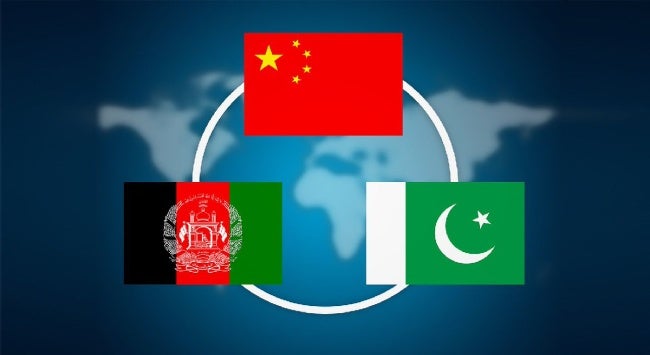
China’s growing involvement reflects both Pakistan’s limited ability to shape developments in Afghanistan and Beijing’s expanding regional interests. This has led to greater reliance on trilateral mechanisms involving China, Pakistan and Afghanistan, notably the sixth round, held in August 2025, which focused on addressing the root causes of terrorism. These formats have gained prominence amid the ineffectiveness of broader regional platforms such as the South Asian Association for Regional Cooperation.
China has gradually shifted from quiet diplomacy to more active mediation, as reflected in the April 2026 ‘Urumqi Process’, which sought to ease tensions between Afghanistan and Pakistan. However, the initiative failed to address Pakistan’s concerns over the Afghan Taliban’s support for the TTP. Despite continued diplomatic engagement, mutual accusations have persisted. Following renewed terrorist attacks in Pakistan in May 2026, Islamabad again blamed Afghanistan-based militants while the Afghan Taliban accused Pakistan of cross-border attacks inside Afghanistan.
While China has shifted diplomatically from so-called ‘panda diplomacy’ to ‘wolf warrior diplomacy’, it remains cautious about exerting influence in ways that could be seen as interference in domestic affairs. This reflects its grand strategy and narrative of promoting South-South cooperation and a new world order. Despite its interest in stable Afghanistan-Pakistan relations, China has not used coercive means to compel either side toward a peace settlement.
The IEA 2.0 has repeatedly pledged that Afghan territory will not be used against any country. However, Pakistan argues that the continued rise in TTP attacks undermines this commitment. Although reports in June 2026 suggested that the IEA warned the TTP against targeting Pakistan, Islamabad has dismissed these steps as insufficient. Unless the IEA addresses Pakistan’s concerns by ending support for the TTP and taking effective action against the group – either independently or in cooperation with Pakistan – mediation efforts are unlikely to succeed.
Given its substantial investments in Pakistan and broader ambitions for regional connectivity under the BRI, Beijing has a strong interest in ensuring stability in both Afghanistan and Pakistan and a cooperative relationship between the two neighbours. China is therefore expected to continue facilitating dialogue between Kabul and Islamabad.
. . . . .
Dr Zahid Shahab Ahmed is an Associate Professor at the National Defense College of the United Arab Emirates, in Abu Dhabi. He is also a Non-Resident Fellow at the Institute of South Asian Studies (ISAS), an autonomous research institute at the National University of Singapore (NUS). He can be contacted at zahid.ahmed@deakin.edu.au. The author bears full responsibility for the facts cited and opinions expressed in this paper.
Pic Credit: X
-
 More From :
-
 Tags :
-
 Download PDF