


Summary
Bangladesh has long sought India’s extradition of Sheikh Hasina. Her announcement that she plans to return to Bangladesh could further unsettle the country’s politics and strain India-Bangladesh relations.
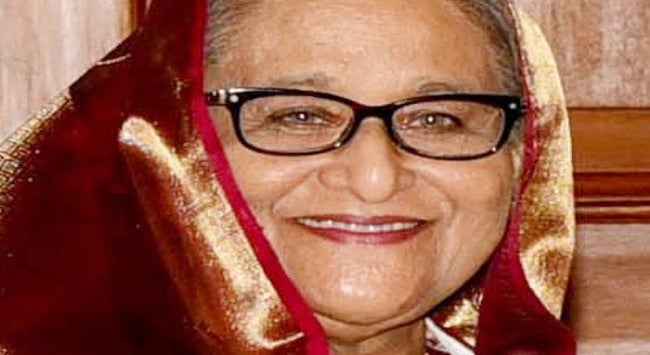
Ties between New Delhi and Dhaka in recent times have largely hinged on the political fate of Bangladesh’s former Prime Minister Sheikh Hasina. In 2024, following student protests, Hasina exited the country and landed in India. Since then, she has been living in New Delhi. Bangladesh’s interim government (August 2024-February 2026) and the one elected in February this year under the leadership of the Bangladesh Nationalist Party (BNP) leader, Tarique Rahman, have requested that New Delhi extradite her. In its bi-weekly media briefing, India’s Ministry of External Affairs stated that India is still “examining the matter” with its “established procedures”. Meanwhile, Bangladesh has conducted an in-absentia trial of Hasina. On 17 November 2025, a three-member bench of the International Crimes Tribunal (ICT) sentenced her to death. She was convicted on three charges: incitement, ordering killings and failing to prevent atrocities during the student protests of 2024.
Bangladesh’s government is particularly disturbed by Hasina’s political statement from New Delhi. On 5 August 2026, appearing via a video link at an event hosted by the Foreign Correspondents’ Club (FCC) in New Delhi, Hasina announced that she plans to return to Bangladesh in December 2026 though no exact date has been set. She stated, “I may be detained, I may be sent to prison. But fear cannot decide my duty to the people…I cannot stay away while my beloved countrymen are suffering.” She added, “I know that they may put me in jail or they may kill me, anything may happen, but still, I have to go back.”
Reacting to Hasina’s address to the event, Bangladesh’s foreign ministry responded to Hasina’s comment by stating, “Bangladesh is outraged that the absconding convicted genocider Sheikh Hasina was allowed this evening to engage in live interaction with the media in New Delhi where she and her henchmen launched venomous vitriol against the State of Bangladesh and her people.” India’s foreign ministry spokesperson Randhir Jaiswal replied, [the Indian] government had no role to play in what was an event by a private media entity and government does not endorse anything said at the forum, especially with regard to the duly constituted Government of Bangladesh.”
Several days after the FCC event, India’s High Commissioner to Dhaka, Dinesh Trivedi, met with Rahman. Following the meeting, Shahadat Shadhin, Deputy Press Secretary to the Bangladeshi Prime Minister, said that “Bangladesh hopes that India will expedite the process of extraditing Sheikh Hasina”. He added that Rahman emphasised the need to create a “conducive environment” to advance bilateral ties, and Dhaka “reiterated the request to extradite the suspected killers” of Osman Hadi.
A day after meeting Rahman, Trivedi landed in New Delhi where he met India’s Prime Minister Narendra Modi. Notably, Rahman, in his capacity as chairperson of the Bay of Bengal Initiative for Multi-Sectoral Technical and Economic Cooperation, has been invited to attend the 18th BRICS Summit, scheduled for 12 and 13 September 2026 in New Delhi. Modi has also invited Rahman for a bilateral visit. The Bangladesh government has yet to decide on the visit.
A major strategic concern for India is Bangladesh’s growing engagement with Pakistan and China. Hasina’s son, Sajeeb Wazed, has claimed that “Bangladesh has become another Pakistan on India’s eastern front”. He allegedly raised “concerns over the role of foreign intelligence agencies in Bangladesh”. Rahman’s visits to Malaysia and China, rather than to India, soon after becoming prime minister, are widely seen as Dhaka’s attempt to recalibrate its foreign policy. However, strained bilateral ties due to political differences and confrontation over issues such as cross-border migration/movement, Hasina’s extradition and water sharing from transboundary rivers are widely regarded as the main reasons for Rahman snubbing New Delhi till now.
Hasina’s landing in Bangladesh will not be an easy affair; it may stir up the country’s politics. During her long autocratic rule and her last days as prime minister, many people suffered. Many Bangladeshis want her to face punishment for the July-August 2024 events. Some even feel that justice will be done only when Hasina is hanged to death. As she spoke at the FCC event, protestors in Dhaka burned her effigy. The ancestral home of former Bangladesh cricket captain and Awami League lawmaker, Shakib Al Hasan, in Magura town was also attacked by some people after he virtually joined the FCC event.
Hasina has denied all charges against her. After the ICT convicted her, Hasina questioned the legitimacy of the tribunal and called the verdict “biased and politically motivated”. Speaking at the FCC event, Wazed also questioned the number of deaths reported in the United Nations report.
In a changed political situation in the country, Hasina’s landing in Dhaka will determine the Awami League’s political future and judge the fairness of Bangladesh’s institutions. It is difficult to ascertain how many of her supporters living in silence in Bangladesh will come out to fight for her political resurrection. More significantly, Hasina’s plan to return will test India’s persuasive power, as New Delhi, in any condition, is not likely to accept that a 78-year-old friend has to face any form of maximum physical punishment in her country.
. . . . .
Dr Amit Ranjan is a Research Fellow at the Institute of South Asian Studies (ISAS), an autonomous research institute at the National University of Singapore (NUS). He can be contacted at isasar@nus.edu.sg. The author bears full responsibility for the facts cited and opinions expressed in this paper.
Pic Credit: Wikimedia Commons
-
 More From :
-
 Tags :
-
 Download PDF