


Summary
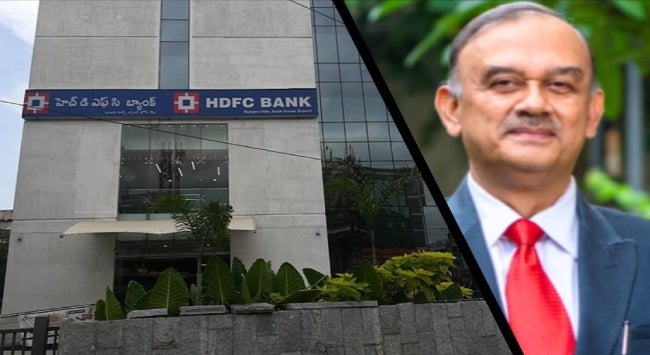
The chairman and independent director of HDFC bank, India’s largest private bank by market cap, resigned abruptly. He cited processes and practices in the bank not being in congruence with his personal ethics and values. The resignation has raised a storm in the financial markets with issues regarding governance and ethics and the role of independent directors coming to the fore.
The recent resignation of Atanu Chakraborty, chairman and independent director of HDFC bank, has reignited a vital debate in corporate governance: what is the true role and responsibility of an independent, non-executive chairperson on a bank’s board? This question is critical in the banking sector, where governance lapses can have systemic consequences, affecting not just shareholders but depositors and the broader economy.
An independent non-executive chairperson occupies a unique position in corporate governance. Unlike executive directors, he is not involved in the day-to-day management of the institution. Also, unlike promoter-chairpersons, he is not expected to be free from controlling interests. His primary mandate is to ensure that the board functions effectively and independently and in the best interests of all stakeholders. In theory, the independent non-executive chairperson is the custodian of governance standards. He is expected to maintain a delicate balance – supporting management while also exercising oversight and, when necessary, restraint. In practice, however, this balance is often fraught with challenges, especially in large financial institutions.
The Banking Context
Governance in banks is not merely a matter of corporate efficiency but of financial stability. Recognising this, regulators such as the Reserve Bank of India have placed significant emphasis on board independence, fit-and-proper criteria and risk oversight. Unlike in many non-financial corporations, where governance lapses may primarily affect shareholders, in banks, these can lead to erosion of depositor confidence and systemic risks. Therefore, the chair is expected to ensure robust risk management frameworks, compliance with regulatory norms and ethical conduct at all levels.
The chair is responsible for setting the agenda, ensuring meaningful discussions and fostering an environment where independent directors can express dissent without fear. This includes ensuring that critical issues, such as risk exposure, asset quality and compliance, are adequately debated. In many banks, especially those with dominant chief executive officer (CEOs), there is a natural concentration of executive authority. The independent chair must act as a counterweight, ensuring that the CEO and management remain accountable to the board. This involves seeking pertinent information, demanding transparency and resisting undue influence. The chair, who is often very experienced and distinguished, has to strike a fine balance with non-intrusive supervision and set the tone at the top. Ethical lapses, conflicts of interest and governance failures often reflect weaknesses at the board level. The independent chair must ensure that governance frameworks are not merely formalities but are actively enforced and regulatory concerns are addressed promptly and transparently. Critical committees such as audit, risk, nomination and remuneration should function under the broader oversight of the chair. Ensuring their independence and effectiveness is a core responsibility.
Nevertheless, despite the clarity of these responsibilities, several structural challenges complicate the role of an independent chair.
The most common among these is the information asymmetry that boards are often vulnerable to. Non-executive directors rely heavily on information provided by the management. If disclosures are incomplete or selectively presented, the chair’s ability to exercise effective oversight is severely compromised. Banking is a complex domain requiring deep understanding of risk, regulation and financial products. Independent chairs may not always have the bandwidth or expertise to fully grasp the nuances, especially in large, diversified banks. Even independent directors may face subtle pressures – social, professional or reputation – which can influence their judgment. Long tenures can also dilute independence, leading to familiarity with management and that is the reason that the regulator has fixed a limit of only two tenures to a director with each tenure not exceeding five years. While executive failures are easier to attribute, governance failures are often diffused across the board. This creates ambiguity regarding the extent to which an independent chair should be held accountable.
Lessons from Recent Developments
The developments at HDFC Bank underscore the growing scrutiny of board-level governance in India. They highlight that independence is not merely a formal designation but a substantive responsibility. Regulators and stakeholders are increasingly expecting independent chairs to be proactive, not passive. A key lesson is that governance cannot be episodic. It must be continuous and embedded in institutional culture. Another is that independence must be demonstrable – not just in legal terms but also in conduct, decision-making and outcomes.
In the light of the recent exit of its independent non-executive chairperson, citing practices which were not in congruence with his ethics and values, HDFC bank has appointed three law firms to review the circumstances around his abrupt resignation. This development is a proactive and healthy development to ensure an effective and fact based assessment of the issues raised in the resignation letter. It will help to establish high governance standards.
Balancing Independence with Engagement
A recurring dilemma is whether an independent chair should remain distant to preserve independence or engage deeply to be effective. The answer lies in calibrated engagement. Excessive distance can lead to irrelevance while excessive involvement can blur the line between oversight and management.
An effective independent chair is one who is informed but not intrusive, engaged but not overbearing, and assertive but not adversarial. This requires not just technical competence but also judgment, integrity and moral courage.
Conclusion
The debate triggered by recent events is both timely and necessary. As India’s financial system grows in scale and complexity, the quality of governance will become an even more critical determinant of stability and trust.
The independent non-executive chairperson is central to this governance architecture. His role is not ceremonial; it is foundational. He is the guardian of board integrity, the arbiter of accountability and the steward of stakeholder trust.
Ultimately, the effectiveness of such a role depends not only on regulatory frameworks but also on the individuals who occupy the position. Independence, after all, is as much a matter of character as it is of structure.
. . . . .
Mr Vinod Rai is an Honorary Senior Fellow at the Institute of South Asian Studies (ISAS), an autonomous research institute at the National University of Singapore (NUS). He is also a former Comptroller and Auditor General of India. He can be contacted at raivinod@hotmail.com. The author bears full responsibility for the facts cited and opinions expressed in this paper.
Pic Credit: Wikimedia Commons and ISAS-NUS
-
 More From :
-
 Tags :
-
 Download PDF