


Bangladesh’s Middle East Bind:
Energy, Remittances and Diplomacy
Imran Ahmed, Mriganika Singh Tanwar
30 March 2026Summary
The escalating conflict in the Middle East poses significant economic and political challenges for Bangladesh, particularly through disruptions to energy supply, remittances and trade. It also serves as an early test for the newly elected government and raises critical questions about its capacity to manage external shocks and reduce structural dependencies while balancing domestic unrest and complex geopolitical alignments.
Conflict across the Middle East has entered its fourth week after the United States (US) and Israel launched ‘Operation Epic Fury’ on 28 February 2026 – a joint military strike targeting Iranian nuclear facilities, military infrastructure and leadership.
For Bangladesh, the war in the Middle East presents critical challenges. The conflict threatens Dhaka’s energy supply through the Strait of Hormuz, endangers Bangladeshi migrant workforce in the Gulf states, raises freight costs for trade and increases pressure for the newly elected government to navigate a sensitive diplomatic line between key partners in Washington, Tehran and the Gulf. As tensions between Iran and US-Israel thicken, the new government’s crisis management abilities against external shocks and geopolitical dependencies are being put to the test.
Bangladesh has dense ties to the Middle East, centred on labour migration, remittances, energy trade and religious-political affinity. Over 4.5 million Bangladeshi workers are currently employed across the Gulf Cooperation Council (GCC) countries – Saudi Arabia, the United Arab Emirates, Qatar, Kuwait, Oman and Bahrain – predominantly in low-skilled and semi-skilled jobs. In the fiscal year 2025-26, around 45.4 per cent of total remittance income (US$30 billion [S$38.7 billion]) came from the GCC countries. A prolonged crisis could significantly reduce remittance inflows which play a crucial role in supporting foreign exchange reserves and strengthening macroeconomic stability.
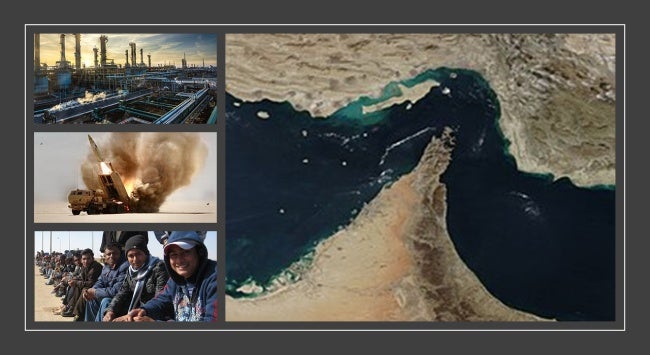
Bangladesh is heavily reliant on imports for almost 95 per cent of the energy needs. It imports around 1.4 million tonnes of crude annually through the Strait of Hormuz under long-term contracts with Saudi Aramco and Abu Dhabi National Oil Company, while about three-quarters of liquefied natural gas (LNG) imports come from Qatar, whose deliveries have been suspended due to war-related disruptions. With Tehran blocking the Strait of Hormuz, crude oil and LNG supply shortages are impacting electricity generation, mobility, industrial productivity and food security. In response to the energy crisis, the government has imposed fuel rationing and daily limits on fuel sales to counter panic buying and manage stocks. Universities have been asked to suspend operations in order to reduce electricity demand and cut power use.
Additionally, four of the five state-run fertiliser plants were shut to prioritise power generation and avoid large-scale blackouts. In an effort to manage the ongoing demand, Dhaka also sought refined oil from India, receiving around 5,000 metric tons through a cross-border pipeline, with further talks to secure an additional 30,000 metric tonnes from Indian Oil Corp. M Mashrur Reaz, Chairman and Chief Executive Officer of Policy Exchange Bangladesh, speaking on the energy crisis, warned that “…exports are being delayed due to shipping disruptions and higher freight costs, while rising costs of petroleum-based raw materials increase production expenses for Bangladesh’s apparel sector, risking order losses and weakening foreign exchange inflow.”
Economically, the war transmits immediate shocks through energy and labour markets. The blockade of Strait of Hormuz threatens delivery schedules and increases insurance costs, while higher global oil and gas prices strain Bangladesh’s import bill, currency stability and already tight external balances. The situation also puts a strain on remittances as migrant jobs are jeopardised, salaries are delayed and travel is disrupted across the Gulf. The dependence on maritime energy routes and vulnerability to regional conflict also highlight the importance of diversifying suppliers, strategic reserves and regional connectivity projects.
Moreover, the war is the first major strategic stress-test for the newly elected Bangladesh Nationalist Party government in Dhaka. Rising fuel prices and rationing measures risk stoking popular discontent against the government, especially in an environment marked by economic fragility. Mass protests erupted in Dhaka demonstrating public anger over US-Israeli actions. The disruptions and unrest caused by the war directly challenge the new administration’s capacity to manage public expectations and policy coordination.
The immediate worry for Dhaka is that any further disruption around the Strait Hormuz or damage to Gulf infrastructure will keep imported fuel prices elevated, forcing the government to choose between higher subsidies, tariff hikes or rationing – all of which are politically costly in a sensitive economic environment. Moreover, migrant workers and their remittances will remain a critical pressure point, with even modest slowdowns in deployments or wage growth in the Gulf causing ripple effects on consumption, investment and the banking system in Dhaka. As prices rise and services strain, the new government’s room for error will narrow and opposition forces are likely to frame the impact of external shocks as evidence of domestic mismanagement. The real question that remains is whether Dhaka will use this crisis as an inflection point towards the diversification of its energy supply chains and labour markets.
. . . . .
Dr Imran Ahmed is a Research Fellow at the Institute of South Asian Studies (ISAS), an autonomous research institute at the National University of Singapore (NUS). He can be contacted at iahmed@nus.edu.sg. Ms Mriganika Singh Tanwar is a Research Analyst at the same institute. She can be contacted at m.tanwar@nus.edu.sg. The authors bear full responsibility for the facts cited and opinions expressed in this paper.
Pic Credit: Wikimedia Commons and ISAS-NUS
-
 More From :
-
 Tags :
-
 Download PDF