


Summary
India’s Unified Payments Interface (UPI) has transformed the country’s payment landscape by combining convenience, interoperability and zero-cost transactions. The zero-Merchant Discount Rate (MDR) model was instrumental in driving adoption, particularly among consumers and small merchants. However, as UPI has matured into critical national digital infrastructure, questions of financial sustainability, cybersecurity and continued investment have acquired greater importance. There is a case for a differentiated MDR on appropriate high-value commercial transactions. Preserving free person-to-person and small-value payments while selectively pricing commercial usage could reconcile financial inclusion with the long-term sustainability of India’s digital payment ecosystem.
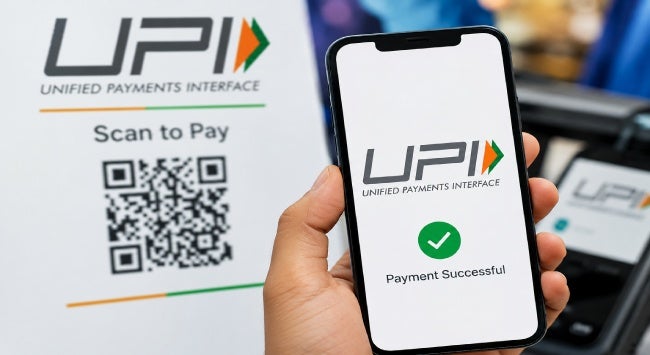
There is something deceptively simple about the Unified Payments Interface (UPI). A customer buys a cup of tea, scans a QR code and, within seconds, money moves from one bank account to another. No cash changes hands, no card is swiped and, most importantly, neither the customer nor, in most cases, the merchant sees a charge for the transaction. Yet behind that apparently effortless exchange lies one of the most sophisticated pieces of financial infrastructure created in modern India. Banks, payment service providers, technology platforms, authentication systems, cybersecurity networks and settlement mechanisms have to work continuously and securely to make that single transaction possible.
The extraordinary scale that UPI has now achieved has brought an important economic question to the forefront. In July 2026 alone, UPI processed 23.66 billion transactions with a value of approximately ₹29.9 lakh crore (S$401.3 billion), its highest monthly volume to date. The UPI is no longer an experimental payment mechanism or simply a convenient alternative to cash and cards. It has become an essential component of India’s financial infrastructure. The question consequently is no longer whether the zero-fee model was appropriate. It clearly was. The more difficult question is whether a system of this magnitude can, and should, remain economically free indefinitely.
The recent debate over the Merchant Discount Rate (MDR) has to be understood against this background. It is tempting to portray the issue as a choice between a ‘free UPI’ and a ‘charged UPI’. That is, however, an overly simplistic formulation. The emerging policy discussion is really about whether India should move from a universal zero-pricing model to a more differentiated and selective pricing structure, under which the vast majority of ordinary transactions remain free while certain commercial transactions contribute towards the cost of the infrastructure from which they derive substantial value.
This distinction is important because the zero-MDR regime was itself the product of a deliberate public-policy choice. When UPI was introduced in 2016, India’s principal challenge was not the financial sustainability of an already mature payment network. It was adoption. Digital payments had to compete against cash, which was familiar, universally accepted and apparently costless to the user. For a small trader, a vegetable vendor or a neighbourhood shopkeeper operating on narrow margins, even a small charge on every digital transaction could have been a significant deterrent. Eliminating MDR, therefore, removed one of the principal barriers to adoption and helped create the network effects on which UPI’s success ultimately depended.
The logic was compelling. A payment system becomes more useful as more people use it. Once consumers know that almost every merchant accepts UPI, and merchants know that almost every customer can pay through it, the system acquires a value far greater than the cost of any individual transaction. The QR code became the simple physical manifestation of a sophisticated national payment network. The extraordinary penetration of UPI demonstrates that this policy worked remarkably well.
The difficulty is that the economics of a payment system change once the system becomes ubiquitous. The policy instrument that is appropriate for creating a network need not necessarily be the appropriate permanent business model for maintaining it. UPI today processes billions of transactions every month and has become so deeply embedded in everyday economic activity that its reliability and resilience have implications extending well beyond the interests of individual payment companies. Cybersecurity, fraud prevention, technological capacity, authentication, dispute resolution and system resilience require continuous investment. None of these costs disappear because the end user does not see a charge.
The Case for a Selective MDR
Writing in The Times of India on 10 August 2026, G Padmanabhan, former executive director RBI, argued that the zero-fee approach had served an important purpose during the initial phase of UPI but that the system had now reached a stage where a selective charging model was necessary.[1] His argument is important precisely because it avoids the false choice between universal free payments and blanket transaction charges. The issue, in his formulation, is not whether UPI should suddenly become a paid service but whether the payment ecosystem can remain sustainable without developing a rational source of revenue from those transactions that derive substantial commercial value from it.
The case for a selective MDR has a broader economic foundation. Payment systems, like other forms of infrastructure, have costs. The fact that technology can reduce those costs does not mean that the underlying infrastructure has no cost. Indeed, one of the purposes of technology is to make transactions more efficient and less expensive, with those efficiencies ultimately benefiting users. However, there is a difference between reducing the cost of a service and eliminating the economic requirement that somebody should finance the infrastructure providing it. The challenge is, therefore, to establish a pricing mechanism that reflects the economics of the system without undermining the public-policy objectives that justified zero pricing in the first place.
This is where the idea of selective MDR becomes significant. A ₹100 (S$1.35) payment made by a customer to a small neighbourhood shop is economically and socially different from a ₹500,000 (S$7,700) payment made to a large commercial enterprise. The first may be principally an instrument of financial inclusion and convenience. The second represents a commercial transaction in which the business derives considerable value from immediate settlement, reduced cash handling, automated reconciliation, lower collection costs and the convenience offered to its customers. It is not unreasonable to ask whether the two transactions should necessarily have identical pricing.
The arithmetic of UPI reinforces this argument. Earlier proposals considered by policymakers suggested that a relatively small proportion of high-value transactions account for a disproportionately large share of the value flowing through the system. Reuters reported that transactions above ₹2,000 (S$30) accounted for only about four per cent of merchant-payment volumes but around 67 per cent of their value.[2] The significance of this is not that ₹2,000 (S$30) should necessarily become the final threshold; no such final threshold has yet been announced. Rather, it demonstrates the potential for a differentiated model in which a relatively narrow segment of high-value commercial transactions could contribute towards the cost of the system without burdening the overwhelming majority of low-value payments.
The government’s latest position is important in this regard. Parliament has passed the Taxation and Other Laws (Amendment) Bill, 2026, which creates an enabling framework for changes to the existing zero-MDR regime. However, the legislation itself does not mean that MDR has now been imposed on UPI transactions. The government has made it clear that the actual pricing framework remains to be determined. Finance Minister Nirmala Sitharaman has also reiterated that consumers will not be charged for using UPI and that person-to-person transactions will remain free.[3] Any future MDR, the government has indicated, would be confined to a limited category of merchant transactions and would be nominal.
The government’s clarification is significant because much of the public debate has proceeded on the assumption that the passage of the legislation means the end of free UPI. That is not the position. The legislation is better understood as creating policy space. It enables the government and the regulatory authorities to move away from an absolute prohibition on MDR if economic circumstances warrant it. It does not prescribe that every transaction should carry a fee, nor does it automatically impose a charge on the consumer.
Indeed, the government’s own justification for opening this policy space is closely connected with the question of sustainability. Its recent statement has emphasised the need for continued investment in cybersecurity, fraud prevention, infrastructure and technological resilience, while recognising that reliance on government subsidies alone cannot indefinitely support an ecosystem operating at UPI’s present and projected scale. The issue, therefore, has moved from the question of whether the government should encourage digital payments to the more mature question of how the infrastructure underpinning those payments should be financed.
This raises the difficult question of who should ultimately bear the cost. At present, the absence of MDR does not mean that UPI transactions are costless. The cost is distributed across banks, payment service providers, technology companies and, indirectly, public finances through various incentive mechanisms. If the government continues to subsidise the system, the taxpayer bears part of the burden. If banks and payment companies absorb the costs, those costs are reflected elsewhere in their operations. In either case, the economic cost exists; it is simply not visible to the person making the payment.
Is the UPI a Public Good?
There is, therefore, a strong argument for distinguishing between the payment infrastructure as a public good and the commercial services that use that infrastructure. The underlying UPI rail can and perhaps should remain a form of digital public infrastructure, accessible to all and protected in the public interest. However, that does not necessarily imply that every commercial transaction carried over that rail must remain free. A large enterprise that derives substantial value from instantaneous digital settlement can reasonably be expected to make a modest contribution towards maintaining the system.
Such an approach would also address an increasingly difficult question of equity. There is an obvious public-policy justification for ensuring that a street vendor is not discouraged from accepting a ₹50 (S$0.68) or ₹100 (S$1.35) digital payment. There is a much weaker justification for using public resources indefinitely to subsidise the payment infrastructure of a large corporation processing thousands of high-value transactions. The distinction between the two is not merely one of size; it is a distinction between financial inclusion and commercial efficiency.
At the same time, the introduction of MDR carries genuine risks. A merchant who is formally required to pay MDR may seek to recover the cost through higher prices or an explicit surcharge. The government can discourage or regulate direct surcharging, but it cannot entirely determine how every business incorporates a new cost into its pricing structure. The ultimate incidence of the charge will depend upon competition, margins and the bargaining power of merchants and payment providers. A carefully designed MDR regime must, therefore, consider not merely who formally pays the fee but who ultimately bears its economic burden.
There is also a danger that poorly designed pricing could undermine precisely the network effects that made UPI successful. Small merchants are particularly sensitive to transaction costs. If the fee structure is complicated or if even low-value transactions begin attracting charges, merchants may revert to cash or seek alternative arrangements. Consumers, too, could become reluctant to use a system they had come to regard as universally free. The simplicity and predictability of UPI are among its greatest strengths, and any pricing reform must preserve them.
For this reason, the principle of selective MDR is considerably more attractive than a blanket transaction charge. The objective should not be to monetise UPI indiscriminately but to identify those parts of the ecosystem where commercial users can reasonably contribute to its cost. Person-to-person payments should remain free. Low-value payments should remain free. Small merchants should be protected. The charges, if introduced, should be directed towards larger commercial transactions and larger merchants for whom the convenience and efficiency of UPI constitute a meaningful commercial benefit.
A Modest MDR will Aid Sustainable Growth
There is also a compelling case for keeping any MDR modest. The purpose should be to create a sustainable economic foundation, not to turn UPI into a revenue-maximising payment network. The payment system should remain cheaper and more accessible than competing alternatives. Its enormous network effects are themselves a public asset, and excessive pricing could destroy part of the value that India has spent a decade creating.
The question of pricing also has to be considered in the context of competition within the payments ecosystem. UPI has encouraged an extraordinary range of private innovation, but the market is also concentrated among a relatively small number of major payment applications. A new MDR regime must not inadvertently favour the largest players at the expense of smaller fintech companies. If only the largest firms can absorb or negotiate payment costs, the long-term consequence could be greater concentration and reduced innovation. The regulatory framework must, therefore, remain neutral and preserve interoperability and competition.
There is an even deeper lesson in the controversy. The success of UPI illustrates the power of the state in creating digital public infrastructure, but it also demonstrates that public infrastructure requires a sustainable economic foundation. India’s achievement was not simply to invent another payment application. It was to establish an interoperable national payments architecture upon which banks, fintech companies, merchants and consumers could build. Once such infrastructure becomes systemically important, resilience becomes as important as adoption.
The transition from zero pricing to selective pricing should, therefore, not be regarded as a retreat from the philosophy of UPI. In a sense, it is a recognition of its success. The zero-fee policy helped build the network. The next challenge is to ensure that the network remains financially and technologically capable of supporting the enormous economic activity that now depends upon it.
The government’s position appears to be moving in the same direction, although with considerable caution. By creating an enabling legislative framework while simultaneously assuring citizens that ordinary UPI transactions will remain free, the government has attempted to separate the question of sustainability from the politically sensitive issue of consumer charges. This is a sensible approach. It allows the pricing structure to evolve without undermining public confidence in the system.
Ultimately, the debate should not be framed as a choice between ‘free UPI’ and ‘paid UPI’. That is too crude a formulation for a system that has become so important to the Indian economy. The more meaningful question is whether India can move from a universal zero-price model to a rational and differentiated pricing structure while preserving financial inclusion, competition and consumer convenience.
Moving from Adoption to Sustainability: Getting the Price Right
The first decade of UPI was fundamentally about adoption. It was about persuading Indians to move away from cash, persuading merchants to accept digital payments and creating the network effects necessary for a national digital payment system to flourish. Zero MDR was an important instrument in achieving that objective.
The next decade is likely to be about sustainability. UPI will have to accommodate still greater volumes, increasingly sophisticated fraud, escalating cybersecurity threats and ever greater dependence by businesses and consumers. Those challenges require continuous investment. It is neither economically inevitable nor necessarily desirable that the entire cost should be borne by the taxpayer or absorbed by banks and payment companies. A mature UPI may, therefore, need a mature pricing model.
The most sensible model would preserve the essential character of the system: citizens should be able to transfer money to one another without a charge; small merchants should be able to accept low-value payments without worrying about margins; and digital payments should remain an instrument of financial inclusion. At the same time, large commercial transactions that derive substantial economic value from the speed, convenience and security of UPI could make a modest contribution towards maintaining the infrastructure.
The achievement of UPI has been to make digital payments almost invisible. The customer does not think about the complex machinery operating behind the QR code. That invisibility is a sign of success. However, the economics behind that simplicity can no longer remain invisible to policymakers.
The challenge before India is not to put a price on UPI. It is to put the right price on the right transaction, paid by the right participant, without compromising the public purpose that made UPI successful in the first place.
The zero-fee era created the network. Selective and rational pricing may be what allows that network to endure.
. . . . .
Mr Vinod Rai is an Honorary Senior Fellow at the Institute of South Asian Studies (ISAS), an autonomous research institute at the National University of Singapore (NUS). He is also a former Comptroller and Auditor General of India. He can be contacted at raivinod@hotmail.com. The author bears full responsibility for the facts cited and opinions expressed in this paper.
[1] G Padmanabhan, “Free to Fee: UPI Needs to Change”, The Times of India, 10 August 2026, https://timesofindia.indiatimes.com/blogs/toi-edit-page/free-to-fee-upi-needs-to-change/.
[2] Jaspreet Kalra, “India Paves Way for Return of Merchant Fees on Digital Payments”, Reuters, 4 August 2026, Yahoo Finance, https://sg.finance.yahoo.com/news/india-paves-way-return-merchant-105401090.html.
[3] “UPI Will Remain Free for Consumers, Nirmala Sitharaman Tells Rajya Sabha”, The Hindu, 10 August 2026, https://www.thehindu.com/news/national/upi-will-remain-free-for-consumers-nirmala-sitharaman-tells-rajya-sabha/article71329536.ece.
Pic Credit: Chatgpt
-
 More From :
-
 Tags :
-
 Download PDF