


Summary
Against the backdrop of disrupted global supply chains and rising oil prices, Sri Lanka has implemented a series of measures to manage an impending energy crisis, which will have a severe impact on the country’s economic recovery and food security.
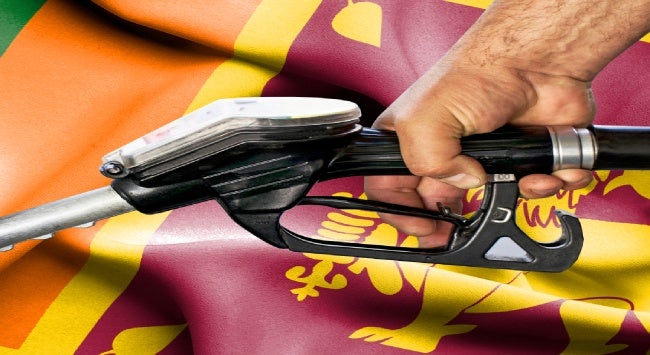
Sri Lanka’s recent decision to implement fuel rationing follows disruptions to global energy supply chains and shipping routes in the Strait of Hormuz after the 2026 United States (US)-Israel strikes on Iran and the onset of the ongoing war. The country’s vulnerability to such shocks is particularly acute due to its heavy reliance on imported energy, fertiliser and other essential goods. Its economic buffers against external shocks remain weak following the 2022 economic crisis when the country lacked sufficient foreign currency reserves, leading to fuel shortages and long queues at filling stations. Sri Lanka has been identified as among the most vulnerable countries to a food price surge (projected at around 15 per cent) amid tensions around the Strait of Hormuz. These developments risk undermining recent macroeconomic stabilisation gains and could push the country toward heightened food insecurity and a cost-of-living crisis.
The Sri Lankan government has introduced a series of measures aimed at reducing electricity consumption by about 25 per cent. These include a nationwide QR-based fuel rationing system aimed at controlling consumption and ensuring more equitable access; declaring Wednesday a special holiday for public institutions and encouraging private companies to do the same; switching off advertising illumination and street lights after certain hours; and requesting households to conserve energy.
Uneven Impact of the Energy Crisis
Farmers, fishermen and other informal sector workers who rely on fuel for non-vehicle uses in their livelihoods initially struggled to obtain adequate supplies, as the rationing system which initially prioritised motor vehicles. The government then introduced special allocations allowing farmers to receive 15 litres of fuel per acre for harvesting and 20 litres of fuel per acre for ploughing without requiring a QR code. On 26 March 2026, the government communicated that steps are being taken to introduce a QR code system in the near future for the non-vehicle category, including generators, fishing vessels and agricultural vehicles.
The surge in oil prices, coupled with a slowdown in the tourism sector and the potential impact on remittances from Gulf countries, signals a severe contraction of the Sri Lankan economy. Measures such as the closure of public institutions on certain days and reduced public transport services – all side effects of the global oil crisis – will most significantly affect small businesses that rely on daily foot traffic and lack the capacity to transition to digital modes of business operation.
The rising cost of fuel and electricity has already translated into higher food, electricity and public transport prices, and living costs across the board can only be expected to heighten as the war continues. For Sri Lanka’s most vulnerable populations, these pressures will have severe consequences. Poverty levels, which doubled to around 25 per cent following the pandemic and the 2022 economic crisis, remain adamantly high. For many households, economic shocks translate into reduced meals, difficulty sending children to school and rising indebtedness. Access to essential medicines also becomes increasingly difficult as costs rise. Many workers end up taking on multiple jobs to make ends meet, such as in the gig economy. In Sri Lanka, crisis-driven outward migration has been an outlet for economic stress in the past; however, the growing instability in Gulf countries and tightening immigration policies in many Western countries may limit this option in the face of the current crisis.
There is an added psychosocial dimension to the current crisis. The Sri Lankan society has experienced repeated cycles of political and economic instability over the past decade, with the 2022 financial crisis, the 2025 Cyclone Ditwah and now the global oil supply disruption. These repeated pressures create widespread uncertainty and anxiety about the future.
Maintaining Domestic Political Confidence
The duration of Sri Lanka’s measures to manage an impending energy crisis remains uncertain. The country has already begun seeking alternatives; it recently received 38,000 metric tonnes of fuel from India and is exploring the possibility of procuring fuel from Russia following the temporary easing of certain Western sanctions. However, analysts warn that the aftereffects of the global economic crisis is likely to persist for a long time even in the best-case scenario of the conflict easing in the near term and trade routes returning to normal.
The current National People’s Power (NPP) government maintains a degree of popularity through its anti-corruption platform and promises to depart from the practices of past establishment politicians. However, the government’s commitment to system change and equal application of the rule of law is being tested, with the Commission to Investigate Allegations of Bribery or Corruption filing charges relating to actions allegedly taken by the current Minister of Energy in 2016 while serving as the Manager of the Procurement and Import Division of the Ceylon Fertilizer Company. The indictment comes alongside allegations by the main opposition – Samagi Jana Balawegaya – over government irregularities in coal procurement for power generation, a portfolio currently under the same minister.
Sri Lanka’s recent political history demonstrates how, in societies with acute inequality, economic hardship can quickly translate into political instability. Youth-led protests that culminated in the 2022 developments reshaped the country’s political landscape, and similar waves of youth-driven protest have appeared in several other South Asian countries in the last few years. If economic conditions deteriorate further, the risk of renewed political instability will remain a significant concern for the NPP government.
. . . . .
Dr Rajni Gamage is a Research Fellow at the Institute of South Asian Studies (ISAS), an autonomous research institute at the National University of Singapore (NUS). She can be contacted at r.gamage@nus.edu.sg. The author bears full responsibility for the facts cited and opinions expressed in this paper.
Pic Credit: Shutterstock
-
 More From :
-
 Tags :
-
 Download PDF