


Summary
The Iran war could adversely impact the growth of artificial intelligence infrastructure in India and across Asia by driving up energy costs for data centre operations and intensifying sustainability concerns arising from the use of coal.
The Iran war could adversely affect the growth of artificial intelligence (AI) infrastructure and AI adoption in India and many other parts of Asia. According to the International Energy Agency (IEA) Chief Fatih Birol, the Iran war has pushed the world to one of its worst energy crises. Energy supplies face severe shortages with energy traffic in the Strait of Hormuz reducing to a trickle. More pressures on supplies will arise from the damage to energy assets in the Gulf. These damages will take months, if not years, to repair. Till then, global oil and gas supplies will not return to pre-war levels.
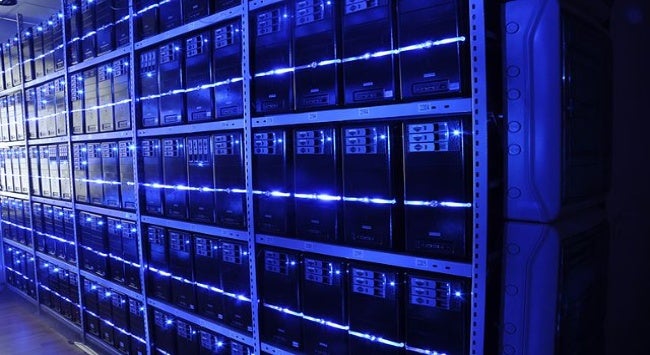
The alarming prospects for energy supplies can seriously impact AI development and adoption in energy-importing countries like India and across most of Asia. AI growth is heavily energy intensive. Data centres housing servers to process and store data through central processing units and larger capacity accelerated graphics processing units consume enormous energy. Hyperscale data centres hosting thousands of servers are the largest energy guzzlers. The IEA estimates that servers account for more than 60 per cent of the energy demand of all data centres; for hyperscale data centres, the share is nearly 80 per cent. Hyperscale data centres are run by global big-technology (tech) firms dominating the AI landscape, such as Google, Microsoft, Amazon and Oracle.
If large data centres are not able to develop and function, then AI adoption will take a big hit. The consequences will be particularly damaging for India, which is aspiring to be a global AI hub, as well as regional economies like Vietnam, Malaysia, the Philippines and Indonesia, which are actively adopting AI.
The energy crisis can halt investments in upcoming data centres with businesses focusing more on deploying funds in existing centres rather than new ones. The functional costs of the existing centres will sharply increase due to higher energy costs. Funds will also need to support higher energy costs in heavy industry, electric transport and appliances. Given the need to preserve output from these industries, the energy demands of the latter will have to be prioritised over new data centres. AI infrastructure growth in India and across Asia will significantly depend on the abilities of global big-tech firms building the hyperscale data centres to continue doing so despite the energy crisis. The abilities of big-tech firms will be shaped by the degree by which renewables can respond to energy demands of data centres.
Currently, coal-fired electricity accounts for the largest share of energy demand by data centres, followed by renewables, natural gas and nuclear power. Over time, renewables are expected to become the largest source of additional energy demand from data centres, followed by nuclear power for hyperscale centres. Google’s upcoming hyperscale data centre in India’s eastern coastal state of Andhra Pradesh plans to use renewable energy – wind and solar power – to manage its large workload through a collaboration with the Adani Group. At a time when the Iran war is severely constraining supplies of conventional energy, renewables are becoming critical to the expansion of AI infrastructure.
However, whether it be wind or solar power, or small modular reactors producing nuclear energy, alternative energy sources take time to develop scalable capacities. Investments in alternative energy to supply the national electricity grids will produce results over a prolonged period. These investments do not yield returns for several years. Except the global big-tech businesses and their collaborators with deep pockets, it will be difficult for countries like India to mobilise investments in new energy sources for powering data centres.
Majority of the non-hyperscale data centres in India and elsewhere in Asia draw electricity from pooled reserves of national grids. Given the current global energy scenario, the grids will become more reliant on coal to generate electricity. If the data centre push is to be sustained, then there is little option for countries other than incentivising the greater use of coal, which will increase carbon emissions and militate against sustainability.
The other constraint to greater growth of AI infrastructure and adoption is the impact of the energy crisis on availability of AI chips. These chips are essential to sustain mega computing powers of large language models like ChatGPT, Claude and Gemini. The AI chip supply chain is facing disruptions in sourcing for raw materials like helium and is bracing to experience across the board cost escalations as gas and coal prices increase. This does not bode well for prospects of large capacity data centres. AI infrastructure growth in India and across much of Asia faces unexpected challenges. The strategies that countries and tech firms employ to address the challenges will demonstrate the industry’s resilience.
. . . . .
Dr Amitendu Palit is a Senior Research Fellow and Research Lead (Trade and Economics) at the Institute of South Asian Studies (ISAS), an autonomous research institute at the National University of Singapore (NUS). He can be contacted at isasap@nus.edu.sg. The author bears full responsibility for the facts cited and opinions expressed in this paper.
Pic Credit: Wikimedia Commons
-
 More From :
-
 Tags :
-
 Download PDF