


Summary
When the Taliban returned to power in Kabul in 2021, it was widely expected that Islamabad and Kabul would grow closer politically. Instead, tensions have escalated, relations have deteriorated and the two are now effectively at war.
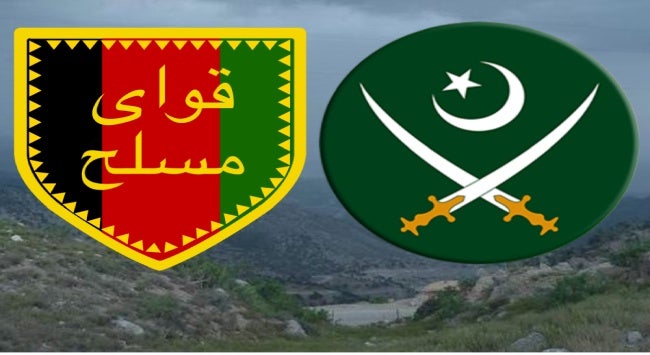
Pakistan and Afghanistan are in an “open war”. In late February 2026, the Pakistan military launched Operation Ghazab lil-Haq (Wrath for the Truth) against Afghanistan, resulting in several deaths and injuries. Pakistan has attacked parts of Kabul, Kandahar, Paktia, Paktika, Khost and Laghman. The United States (US) administration has backed Pakistan’s “right to defend itself”. The military confrontation was preceded by air strikes inside Afghanistan by the Pakistani Air Force on 22 February 2026, which according to the United Nations Mission in Afghanistan, killed “at least 13 civilians”.
The Pakistan Army is fighting against the very group that it created and supported for a long time. To fight the US war against the Soviet Union’s invasion of Kabul in December 1979, the military government of then Pakistan leader, General Zia-ul-Haq, radicalised Pakistan’s establishment and society. With the backing from the US and Saudi Arabia, Zia almost turned the entire Pakistan into an “epicentre of global jihad” against communism. After the Afghanistan war ended in February 1989 and the Cold War shortly after in 1991, to maintain strategic depth in the region, Pakistan became “intimately associated” with the Taliban since its birth in 1994. Pakistan’s military intelligence – Inter-Services Intelligence – trained the Taliban’s commander, Mullah Mohammad Omar, in the 1980s in one of its camps on the fight against the Soviets in Afghanistan. The Taliban captured power in September 1996 after seizing Kabul from its then-President Burhanuddin Rabbani. At that time, Pakistan was one of three countries which recognised the Taliban’s Islamic Emirate of Afghanistan – Saudi Arabia and the United Arab Emirates being the other two.
In late 2001, the US was back in Afghanistan after the terrorist attack on its soil on 11 September 2011. Speaking to CBS television in 2006, Pakistan’s then Head of State, General Parvez Musharaff, revealed that in the aftermath of 9/11, then US Assistant Secretary of State, Richard Armitage, threatened Pakistan’s intelligence chief that his country should be prepared to be bombed “back to the stone age” if it did not cooperate with the US in its war in Afghanistan. Both domestic and external political calculations moved Pakistan from the margins to the frontline in the US’ Afghanistan policy. Despite the government’s cooperation with the US, there was some sympathy and support for the Taliban at the unofficial and official levels. After they were removed from power, the Taliban stayed in touch with some members of the Pakistani establishment and the people from 2001 and 2021.
In 2018, when the Donald Trump administration in the US decided to discuss American pullout from Afghanistan with the Taliban, it requested Pakistan’s assistance and appreciated Islamabad’s role in “advancing the Afghanistan peace process” when the intra-Afghan negotiations began in 2020. In the following year, after the American pullout, the Taliban returned to power in Kabul. At that time, many widely anticipated that Kabul and Islamabad would come closer to each other. However, bilateral ties have deteriorated over the last few years. Since 2021, an estimated 75 clashes took place between Afghan and Pakistani forces.
Three major and several relatively minor contentious issues dominate the relations between Taliban 2.0 and the Pakistan government. First, the dispute over the Durand Line remains. The Taliban call it a Colonial line separating ethnic Pashtuns from the border region. Second, Pakistan accuses the Taliban of harbouring the militants belonging to Tehrik-i-Taliban Pakistan (TTP) or what the Pakistani establishment now calls Fitna al Khawarij (loosely means un-Islamic). In the past, the Taliban mediated between Pakistan and the TTP, but it is argued that a clampdown could threaten the group’s internal cohesion, including possible defection of some fighters from the TTP to the foe group – Islamic State-Khorasan Province (IS-KP). Notably, the IS-KP took responsibility for the attack on a Shiite Mosque in Islamabad on 6 February 2026, while the Taliban condemned the act. The militant attack resulted in 32 deaths and 92 injuries.
Third, Pakistan has accused India of colluding with “anti-Islamabad” groups in Afghanistan. Pakistan’s defence minister, Khwaja Asif, has called the TTP and the Baloch Liberation Army Indian proxies. A few days before Pakistan began its attack on Afghanistan in February 2026, Asif, in an interview with France 24, said that New Delhi and Kabul are “on the same page” on “striking” Pakistan. India rejected all such accusations, calling them “baseless”. Reacting to the current situation, in response to media queries, Randhir Jaiswal, spokesperson of India’s Ministry of External Affairs, said that India “strongly” condemns Pakistan’s airstrikes on Afghan territory. He added that the attack is “another attempt by Pakistan to externalise its internal failures”. Jaiswal also responded that “India reiterates its support for Afghanistan’s sovereignty, territorial integrity and independence”.
Several countries are seeking to mediate, or have offered to mediate, in an effort to promote peace between Pakistan and Afghanistan. However, meaningful military de-escalation will depend largely on the terms and conditions that Pakistan and the Taliban agree upon in managing their bilateral relations.
. . . . .
Dr Amit Ranjan is a Research Fellow at the Institute of South Asian Studies (ISAS), an autonomous research institute at the National University of Singapore (NUS). He can be contacted at isasar@nus.edu.sg. The author bears full responsibility for the facts cited and opinions expressed in this paper.
-
 More From :
-
 Tags :
-
 Download PDF