


Summary
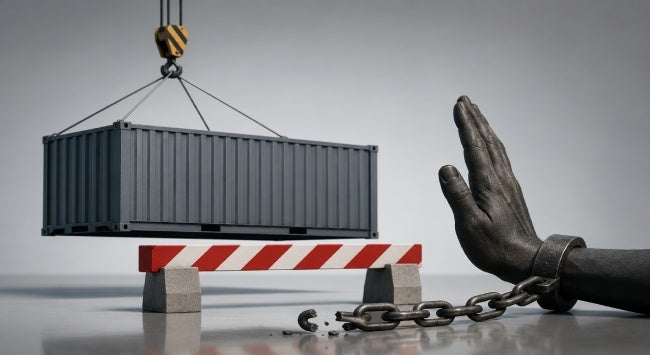
India has prohibited imports using forced labour. While this is a low-cost tactic for placating the United States, more complicated rules on forced labour in a bilateral trade deal can hurt India.
India recently prohibited imports of goods using forced labour. The ostensible objective is to avoid new tariffs of up to 12.5 per cent that the United States (US) has threatened to impose on countries not acting against trade in goods using forced labour. India figures among the 60 countries identified.
The new tariff threats follow the US Trade Representative’s (USTR) investigations under Section 301 of the US Trade Act of 1974. The fresh coercive tactics deployed against trade partners were not unexpected since the reciprocal tariffs imposed last year were struck down by the US Supreme Court. The US Treasury has subsequently refunded more than US$80 billion (S$103.2 billion) collected from delegitimised tariffs.
Thus, while the overturning of tariffs meant significant loss of credibility for the Donald Trump administration, it has also had financial repercussions. It’s imperative for the US to locate tariffs backed by laws that cannot be easily challenged in and dismissed by courts.
Section 301 empowers the USTR to act against unfair trade practices harming interests of American businesses. The section has been frequently used to target countries engaging in such practices. The Joe Biden administration used Section 301 to impose a slew of tariffs in September 2024 on Chinese imports to the US. Furthermore, the Biden administration almost entirely banned imports from China’s Xinjiang province unless the Chinese were able to establish that the imports were not made by using forced labour.
What was China-specific during the Biden administration has become far wider during the Trump administration with forced labour enquiries undertaken against 60 countries. The Biden administration’s goal was to act against human rights violations against Uighur Muslims in Xinjiang. On the contrary, the Trump administration’s forced labour tariffs aimed to restore the upper hand it had in negotiating with trade partners through reciprocal tariffs.
By restricting market access for partner country exports, the country-specific reciprocal tariffs forced US trade partners to cut deals with Washington, including agreeing to large imports and various other concessions in domestic markets. With reciprocal tariffs gone, market access restrictions on exports to the US came down to their earlier lower levels. The US’ capacity to use tariffs coercively, as a result, was heavily weakened.
India was a significant beneficiary of the US Supreme Courts’ decision. While agreeing on an interim trade agreement in early February 2026, the details of the deal were being worked out when the reciprocal tariffs were quashed. This put India in an unexpectedly advantageous position with its exports getting a fresh lease of life in the US market.
Subsequent talks on the deal are yet to deliver final results. It is also obvious that the Section 301 investigations and forced labour tariff threats complicated the negotiations. India’s decision to notify rules for blocking imports using forced labour is a low-cost tactical move to placate the US. Proving the use of forced labour in imports originating in other countries is nearly impossible. Forced labour is defined as “all work or service which is exacted from any person under the menace of any penalty and for which the said person has not offered himself voluntarily”, as defined under the International Labour Organization Forced Labour Convention. Obtaining information from source country markets on such practices is very difficult.
Imports using forced labour will perhaps have to be identified through anecdotal and unverified evidence, as opposed to commercial data and verifiable intelligence. India will also run the risk of inviting trade action from countries whose imports it might prohibit for using forced labour. The laws, therefore, are unlikely to be applied unless the circumstances are exceptional.
There could, however, be some interesting implications of the Section 301 threat on India’s sourcing of imports, including from China. Electronics and lithium-ion battery are goods with forced labour inputs that the USTR identified India to have imported from other countries at the same time when it also imported these goods from the US. India sources both these imports in large amounts from China. The US can complain over these imports outpricing US products in the Indian market. There could be US demands for including rules in the US-India bilateral trade deal that could restrict such imports. There might be further demands for rules preventing the use of these alleged forced labour imports in producing downstream exports for the US market.
The tendency of the Trump administration to force trade partners to yield concessions suiting US business interests has been blatantly obvious. Complicated rules to ensure Indian exports to the US are not wholly, or partly, produced by imported inputs with forced labour might be a tactic for raising fresh barriers on Indian exports. Agreeing to such rules in a binding bilateral trade deal can have detrimental consequences for India.
. . . . .
Dr Amitendu Palit is a Senior Research Fellow and Research Lead (Trade and Economics) at the Institute of South Asian Studies (ISAS), an autonomous research institute at the National University of Singapore (NUS). He can be contacted at isasap@nus.edu.sg. The author bears full responsibility for the facts cited and opinions expressed in this paper.
Pic Credit: Chatgpt
-
 More From :
-
 Tags :
-
 Download PDF