


India-European Union Collaboration:
Green Shipping Corridors
Amitendu Palit, Saeeduddin Faridi
26 February 2026Summary
India and the European Union are developing green shipping corridors to decarbonise their maritime sectors. Despite multiple challenges, the corridors can be consequential assets in expanding sustainable trade and connectivity between India and Europe.
Enthusiasm over the European Union (EU)-India Free Trade Agreement has defrayed attention from another significant cooperation between the EU and India. They will be developing green shipping corridors as part of the EU-India Connectivity Partnership and bilateral transport cooperation. Furthermore, the corridors will institutionalise a significant bilateral climate cooperation initiative.
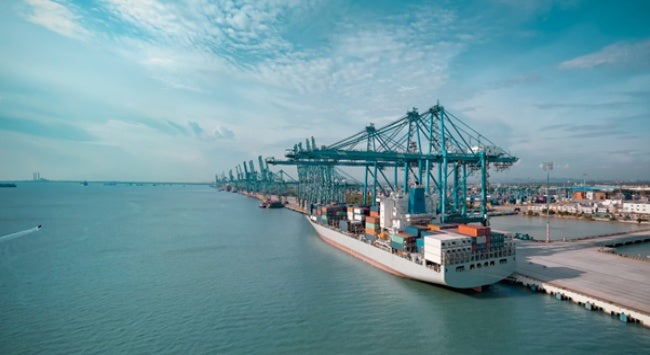
Green shipping corridors are dedicated maritime trade routes aiming to cut emissions from ships by encouraging them to use clean fuel. The shipping industry accounts for around three per cent of global greenhouse gas emissions and is also responsible for occasional oil discharges and ocean acidification adversely affecting oceanic ecosystems. Decarbonising shipping industry is a global priority.
Global shipping lines are actively acquiring vessels that run on clean fuels. Maersk – the shipping and logistics giant from Europe – targets net-zero emissions by 2040 and has introduced methanol-vessels to its fleet, including retrofitting conventional fuel vessels with methanol engines. Along with Mediterranea Shipping Company, Maersk is investing in dual-fuel vessels and green fuels in line to achieve the International Maritime Organisation’s target of achieving net-zero emissions by 2050. These efforts by European shipping businesses are expected to brush off positively on their collaboration with Indian partners in growing green corridors. The latter are critical for enabling the emission-friendly transformation of global shipping fleets.
India’s strategy to decarbonise the maritime sector includes green corridors. By creating deep capacities to store clean fuel at dedicated ports, India can offer clean fuelling options to major shipping lines on key trade routes, such as between India and Europe. This vindicates India’s motivation in building these corridors. Along with the EU, India is also partnering with Singapore in this regard.
India’s green hydrogen policies support green shipping corridors and are mutually complementary. Green hydrogen can be converted to green ammonia and green methanol to serve as sustainable fuels. The growth of the green hydrogen industry in India can accelerate from development of green shipping corridors. Its green hydrogen hub ports – Paradip in Odisha, Deendayal in Gujarat and V O Chidambaranar in Tamil Nadu – can grow into major clean energy buoyed by trade and business generated by the corridors. In a virtuous reinforcement of prospects, these ports and their sustainable trade capacities, in turn, can promote green shipping through the dedicated corridors.
European businesses are aware of the opportunities that collaboration with India can generate for green shipping. The Port of Rotterdam Authority has entered into a memorandum of understanding with India’s AM Green to enable a green energy supply chain between India and Europe. Rotterdam port will be a critical conduit in growth of green shipping corridors between India and Europe given its large capacities for supplying bunkering fuels and sustainable aviation fuels.
Developing green shipping corridors, however, is a formidable task involving multiple challenges – these include developing suitable port infrastructure to cater effectively to requirements of ships running on clean fuels. Foremost among these are bunkering facilities to store clean fuels along with development of internal transport. The costs of creating such infrastructure are significant and entail large investments.
Private ports running commercially might not have enough incentives to invest in green shipping infrastructure unless there is strong demand for the facilities. The volume of demand will depend on the needs of global shipping lines. As mentioned earlier, vessels running on clean fuel are gradually featuring more in global commercial fleets. However, these vessels are more expensive than the traditional ones as their construction requires embedding sophisticated technology to use clean fuels. Clean fuels, such as green hydrogen, are also more expensive to use. Indeed, globally, green hydrogen projects are facing challenges as their costs, and the concomitant retail prices charged by producers from users, remain high. As a result, several containers inclined towards sustainable fuel use have to settle for a relatively less emission-efficient, but a more easily affordable option of using liquified natural gas.
The India-EU partnership in this regard must focus on encouraging appropriate public-private ventures and business consortiums prepared to invest deep, notwithstanding low returns in the short-term. Moving forward, the partnership must also address challenges of aligning regulatory, accounting and certification standards, especially for green hydrogen, which currently vary a lot between India and Europe. Furthermore, developing green shipping corridors in India must anticipate unforeseen and unprecedented obstructions given that, till now, such corridors have hardly come up in developing countries and the global South. The lack of empirical research evidence on evolution and operational issues for green shipping corridors in the developing world can create a policy response vacuum with unexpected downsides.
Notwithstanding the difficulties, green shipping corridors can be consequential assets in expanding sustainable trade and connectivity between India and Europe. It can positively influence other connectivity initiatives involving both, such as the upcoming India-Middle East-Europe Economic Corridor (IMEC). The IMEC is committed to sustainability. Green shipping corridors between India and Europe would greatly enhance the IMEC’s ability to promote sustainable trade across the Asian and European continents. In this regard, the long-term interests of sustainable trade and decarbonising shipping industry are strategic priorities of both India and Europe, which manifest in their overall strategic partnership through green shipping corridors.
. . . . .
Dr Amitendu Palit is a Senior Research Fellow and Research Lead (Trade and Economics) at the Institute of South Asian Studies (ISAS), an autonomous research institute at the National University of Singapore (NUS). He can be contacted at isasap@nus.edu.sg. Mr Saeeduddin Faridi is a Research Analyst at the same institute. He can be contacted at saeedf@nus.edu.sg. The authors bear full responsibility for the facts cited and opinions expressed in this paper.
Pic Credit: World Climate Foundation
-
 More From :
-
 Tags :
-
 Download PDF