


Summary
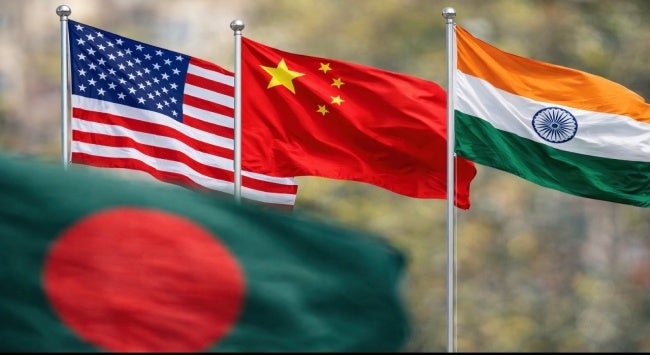
The strategic competition between the United States and China in Bangladesh is intensifying, as Washington seeks to broaden its footprint and counter Beijing’s growing influence. For India, this evolving rivalry presents more risks than opportunities.
Bangladesh’s recent election has sparked renewed debate over the country’s future geopolitical orientation. While much commentary has focused on the relative positions of China and India in the country, an intensifying United States (US)-China competition has emerged as a crucial, new factor in Bangladesh’s geopolitics. This competition will not only play a major role in Dhaka’s future but will also have important implications for New Delhi and its position in South Asia.
The rivalry between the US and China in Bangladesh is relatively new. While China’s influence in Bangladesh has gradually expanded over the last two decades, it initially drew limited attention from Washington, especially compared to the pushback it faced from India. The US’ opposition to Sheikh Hasina’s government, which it saw as accommodating to China, offered the first signs of this competition. The collapse of the Awami League government, which destabilised Bangladesh and reduced India’s preeminent influence, opened political space for the US to push for an increase of its own influence and counter that of China. US-China contest for influence in Bangladesh gained momentum in 2024.
Since the 2024 uprising in Bangladesh, Washington has significantly deepened its engagement with Dhaka. Politically, the US moved quickly to establish ties with the interim government led by Chief Adviser Muhammad Yunus. In a highly symbolic gesture, then-US President Joe Biden met Yunus and conveyed strong support for the new Bangladeshi government. Political outreach also included a visit by US officials during which Washington promised aid to Bangladesh, as well as frequent communications between the two governments. The Donald Trump administration has also welcomed the newly elected government led by Tarique Rahman, urging Bangladesh to conclude defence agreements and deepen security cooperation with the US.
Second, Washington has pushed for greater military cooperation with Dhaka, including a sharp increase in joint exercises such as Pacific Angel 25-3, Tiger 2025, Tiger Lightning 2025, enhanced defence diplomacy and the purchases of Black Hawk UH-60L helicopters. Third, the US and Bangladesh recently signed a trade agreement. The US reduced tariffs on Bangladeshi exports to 19 per cent, gave zero-tariff access to some textiles manufactures with US material and pushed Bangladesh to align with US regulatory standards.
Washington’s increased engagement is unambiguously aimed at countering Beijing. Recently, the newly-arrived US Ambassador to Bangladesh, Brent T Christensen, stated that “the US is concerned about growing Chinese influence in South Asia and is committed to working closely with the Bangladeshi government to clearly communicate the risks of certain types of engagement with China.” He was likely referring to a Chinese drone production facility agreed to be built in Bangladesh and suggested US alternatives to it.
Similarly, in his congratulatory letter to Rahman, Trump urged Dhaka to foster “a Free and Open Indo-Pacific” with Washington – a code for checking Chinese power. Importantly, the US-Bangladesh trade deal also has a provision barring trade agreements with non-market economies, such as that of China. This could hinder Dhaka’s efforts to sign a trade deal with China or join the Beijing-led Regional Comprehensive Economic Partnership.
Ironically, Hasina’s fall has also created new openings for Beijing in Bangladesh by diminishing India’s once-predominant influence in Dhaka. Although China has proceeded cautiously – mindful of the country’s fragile transition – it has nonetheless consolidated its position over the past year and a half. Beijing, Bangladesh’s largest trading partner and greatest source of foreign domestic investment, has pledged to invest US$2.1 billion (S$2.83 billion) in the country and has offered duty-free access to Bangladeshi products until 2028, as well as begun negotiations on a free trade agreement. It has also signed an agreement to build a drone factory, exported light tanks and is reportedly negotiating the sale of J-10C and JF-17 aircraft.
Importantly, China has partnered with Islamabad to expand its influence in Bangladesh and promoted a trilateral between the countries. Beijing has also sought to build long-term relationships across the political spectrum in Bangladesh. It invited a multiparty delegation for two weeks soon after the uprising and has engaged both Bangladeshi Nationalist Party and Jamaat-e-Islami.
Against this backdrop, the return of relative stability in Bangladesh and the consolidation of a strong government are intensifying strategic competition between Washington and Beijing. While China has an advantage, as a result of its gradual extension of influence over the last two decades, Washington benefits from its position as Bangladesh’s largest export market and from Dhaka’s reluctance to rely excessively on Beijing.
What does the accelerating US-India competition in Bangladesh mean for India? First, it reduces New Delhi’s leverage over Dhaka, which remains large even in the face of great setbacks since 2024. A Bangladesh that plays Beijing and Washington against each other would be harder for New Delhi to deal with. Second, it complicates India’s relations with the US, as New Delhi faces the reality that Washington is not only a partner against China but also a competitor in New Delhi’s neighbourhood.
Third, paradoxically, US-China competition may aid India by checking Beijing’s influence in Bangladesh, where New Delhi has recently been on the back foot. Finally, rivalry in Bangladesh – alongside similar competition in Pakistan – could reshape South Asia’s strategic order, a region in which India has long enjoyed a preeminent position.
The competition between the US and China is reshaping Bangladesh’s geopolitics, a process that has accelerated following the formation of a new government in Dhaka. For India – still Bangladesh’s most consequential partner – this shift carries far-reaching and largely adverse implications.
. . . . .
Dr Ivan Lidarev is a Visiting Research Fellow at the Institute of South Asian Studies (ISAS), an autonomous research institute at the National University of Singapore (NUS). He can be contacted at ivanlidarev@nus.edu.sg. The author bears full responsibility for the facts cited and opinions expressed in this paper.
Pic Credit: Chatgpt
-
 More From :
-
 Tags :
-
 Download PDF