


Summary
Balendra Shah’s electoral success in Nepal shows that the people have sought to replace the old political guards and, therefore, voted for change. However, the challenge for the new government is to fulfil the populist promises made to the voters.
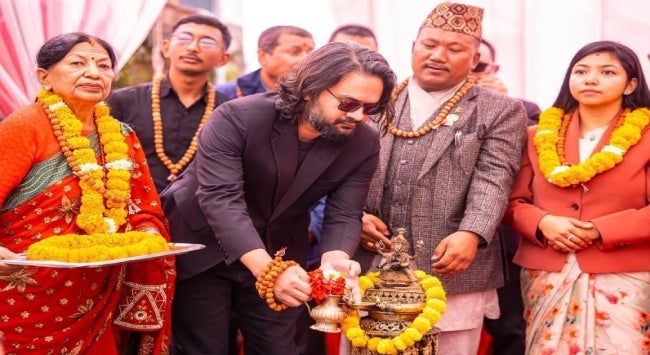
In the first parliamentary elections in March 2026, following the Gen-Z protest in September last year, an engineer, rapper and former mayor of Kathmandu, Balendra Shah (popularly known as Balen), led the Rastriya Swatantra Party (RSP), formed in 2022, to a landslide victory. The party won 124 out of 164 seats, for which votes have been counted. There are 275 seats in the House of Representatives. Out of the total, 165 members of the House of Representatives are elected under the first-past-the-post system, while 110 are elected through proportional representation. Around 60 per cent of the voters cast their votes in this election.
Balen defeated the Communist Party of Nepal-Unified Marxist Leninist (CPN-UML) chair and former prime minister of Nepal, K P Oli, in his own constituency, Jhapa-5, by a large margin. The RSP’s victory is largely built on support from young voters who were unhappy with the political old guard. Balen’s slogan of “time for change” attracted many voters disillusioned with the old leadership. His social media popularity in Nepal is unmatched. He has 3.5 million followers on Facebook, one million on Instagram, 400,000 on X (formerly Twitter) and nearly one million on YouTube.
Several challenges await Balen as he is all set to become the country’s prime minister. First, as Balen joined the RSP just before the elections, he may have to contend with pressure from the party’s members. Balen is also seen by some political commentators as a “neo-populist figure” whose rise in politics is largely due to populist slogans and promises to the people. Some analysts also believe that although the public has rejected the old system, the replacement system may be “overstated”.
Second, in its election manifesto, the RSP promised to maintain an average annual growth rate of seven per cent for the next five years, aiming to increase the per capita income from around US$1,447 (S$1,857) to over US$3,000 (S$3,825) and raise Nepal’s gross domestic product (GDP) to US$100 billion (S$128 billion). Nepal’s current GDP is around US$40-45 billion (S$51-56 billion). Hence, to achieve the targeted GDP, Nepal needs a sustained annual growth rate of above 20 per cent. This is tough given the country’s current economic situation and structural constraints.
Third, the RSP’s manifesto emphasised accountability and transparency to deter corruption. However, it will be interesting to see how Balen handles the charges against the RSP chair, Rabi Lamichhane. In January 2026, the Office of the Attorney General decided to withdraw organised crime and money laundering charges filed against Rabi in the district courts of Kaski, Rupandehi, Kathmandu and Parsa. However, the charges in the cooperative fraud case against Rabi remained unaffected. It was challenged in the Supreme Court of Nepal, which accepted a petition seeking to overturn the decision. In the Surya Darshan Cooperative fraud case, money was allegedly diverted to the Gorkha Media Network. Rabi denied any involvement, claiming that cheques were misused without his consent during his term as the managing director of the network.
Fourth, on foreign policy matters, the manifesto called for the adoption of a “balanced and dynamic diplomacy” and to secure Nepal’s interests, transforming it from a “buffer state” into a “vibrant bridge” through trilateral economic cooperation, regional connectivity and mutually beneficial partnerships. It talked about building “structured partnership frameworks with China by mobilising concessional finance for world-class infrastructure”. Balen had his share of differences with India. In 2023, after India installed a mural of Akhand Bharat (Undivided India), Balen hung a Greater Nepal map in his mayor’s office, showing parts of the Indian states of Uttarakhand, Himachal Pradesh and West Bengal that were once part of Nepali territory. The same year, Balen also banned the screening of Indian films in Kathmandu, alleging that an Indian film suggested that Goddess Sita, wife of Hindu God Rama, was born in India. He argued that according to Hindu scriptures, she was, in fact, born in present-day Nepal. The RSP manifesto also stated that it would conduct a study to review the fixed exchange rate for Nepali rupee (NPR) against the Indian rupee (₹) since 1993. Nepal has maintained a fixed exchange rate of ₹1 to NPR1.6. Some analysts believe that the peg has provided stability and benefited Nepal.
Balen is also a man of controversies. In a midnight post on his Facebook handle in November 2025, he spewed vulgarities at the United States, India, China, CPN-UML, the Congress, RSP, RPP (Rastriya Prajatantra Party) and the Maoists, adding that all of them combined could do nothing. However, he deleted the post within half an hour. Second, during his term as Kathmandu’s mayor, he was accused of using the police to mistreat the poor and the vulnerable section of people in the city. He was also accused of “watching” the burning of the Singha Durbar complex during the September 2025 protest. Balen, however, has denied the accusation. Finally, during his election campaign, Balen drove an expensive black Land Rover Defender registered under Rupandehi-based Trimurti Industries Pvt. Ltd – it is owned by Kamal Kishore Malpani, who has investments in tobacco, spices and the noodle production business. A controversial businessman, Malpani was earlier charged with tax evasion.
A change in Nepal’s politics is welcome. However, whether this political shift can meaningfully address the country’s deep-rooted structural problems remains a colossal question.
. . . . .
Dr Amit Ranjan is a Research Fellow at the Institute of South Asian Studies (ISAS), an autonomous research institute at the National University of Singapore (NUS). He can be contacted at isasar@nus.edu.sg. The author bears full responsibility for the facts cited and opinions expressed in this paper.
Pic Credit: X
-
 More From :
-
 Tags :
-
 Download PDF