


Summary
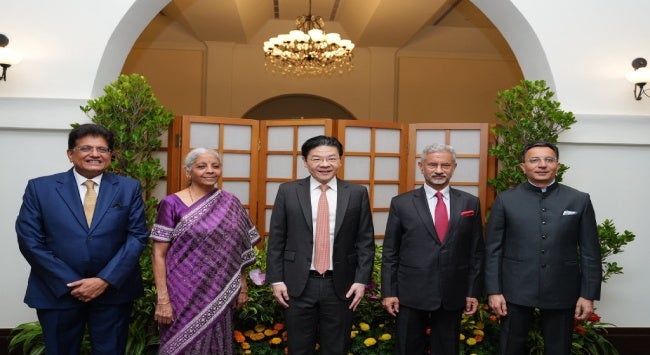
The Fourth India-Singapore Ministerial Roundtable, held in Singapore on 20 August 2026, provided an important platform to review the progress of bilateral cooperation and identify new opportunities for collaboration. The discussions covered six key pillars of cooperation – advanced manufacturing, connectivity, digitalisation, healthcare and medicine, skills upgrading and sustainability – while also exploring emerging areas such as space, nuclear technology, cybersecurity and innovation. The discussions indicate that India and Singapore are moving towards a more practical, technology-driven and industry-oriented partnership, with an emphasis on translating existing agreements into concrete projects and capabilities.
The relationship between India and Singapore has always been more than a conventional diplomatic partnership. It represents a meeting of two complementary strengths: India’s enormous human resources, market, technological potential and growing economy, and Singapore’s expertise in finance, technology, logistics, urban development and international connectivity. The Fourth India-Singapore Ministerial Roundtable (ISMR), held in Singapore on 20 August 2026, is, therefore, significant because it has given fresh momentum to this already strong partnership.[1]
Singapore holds a prominent place in India’s economic partnerships, particularly as a source of foreign investment. It was the top contributor of foreign direct investment (FDI) into India in FY2025-26, totalling US$19.8 billion (S$25.2 billion), and its total FDI contribution since 2000 has crossed US$194 billion (S$246.5 billion), making up close to a quarter of all FDI India has received. Singapore also holds the position of India’s biggest trading partner among the Association of Southeast Asian Nations (ASEAN) member states, while playing an important role in external commercial borrowings and foreign portfolio investment flowing into India.
Trade between India and Singapore has picked up considerably since the India-Singapore Comprehensive Economic Cooperation Agreement came into force, growing from around US$6.7 billion (S$8.5 billion) in FY2004-05 to over US$36 billion (S$45.7 billion) in FY2025-26.[2] This steady rise reflects how the relationship has deepened over the past two decades, with Singapore emerging as a key partner not just in trade, but also in areas like advanced manufacturing, digital transformation, skills development and green economy initiatives – all themes that this ISMR aims to build further momentum on.
The ISMR served as an important platform to assess progress in bilateral cooperation and identify new avenues for collaboration. Discussions focused on six key pillars – advanced manufacturing, connectivity, digitalisation, healthcare and medicine, skills upgrading and sustainability – while also exploring emerging areas such as space, nuclear technology, cybersecurity and innovation. The deliberations underscored a clear shift towards a more practical, technology-driven and industry-oriented partnership, with greater emphasis on translating existing agreements and commitments into tangible projects, capabilities and outcomes.
The greatest positive result of the meeting is the shift from cooperation in established sectors to cooperation in future-oriented sectors. Semiconductors, digital payments, artificial intelligence, cybersecurity, advanced manufacturing, green shipping, space technology and specialised skills will shape the economic landscape of the coming decades. India needs partners who can contribute technology, expertise, investment and global networks, while Singapore benefits from India’s vast market, talent pool and growth opportunities.
Advanced Manufacturing and Semiconductors
One of the most important positive outcomes of the recent Roundtable is the emphasis on advanced manufacturing and semiconductors. The world is increasingly dependent on semiconductor technology, and India is trying to establish itself as a major player in this sector. Singapore has substantial experience in advanced manufacturing and semiconductor-related industries. Cooperation between the two countries can, therefore, help India build not only factories, but also a complete ecosystem involving technology, suppliers, skilled workers and research.
Following the exchange of the Memorandum of Understanding (MoU) on Semiconductor Ecosystem Partnership in 2024, several semiconductor manufacturers have invested in India. These investments are expected to bring not only manufacturing capacity, but also suppliers and supporting companies, including Singaporean companies, thereby helping to create a broader semiconductor ecosystem in India.
The Roundtable recognised significant opportunities for Singapore’s small and medium-sized enterprises supporting the semiconductor industry to enter or expand their operations in India. Discussions, therefore, focused on making the process of relocation or market entry smoother for these companies.
The meeting’s focus on skills development is also equally significant. India possesses one of the world’s largest working-age populations, but demographic strength becomes an advantage only when people possess the skills required by modern industries. The two sides discussed establishing industry-led training centres, particularly in locations where semiconductor companies are investing. Such training would be closely aligned with the actual requirements of industry and would help create the skilled workforce necessary to support India’s emerging semiconductor ecosystem.
Connectivity
Connectivity was another important area of the India-Singapore story. The two sides discussed their collaboration through the Singapore-India Green and Digital Shipping Corridor, with particular attention to facilitating the use of green fuels in maritime transport. This cooperation reflects the importance attached to making future trade and transportation more sustainable.
The two sides also discussed the Air Services Agreement (ASA) in view of increasing investment and trade between India and Singapore and the expected growth in two-way travel. No specific decision was reached on the ASA during the Roundtable. Instead, the matter will continue to be considered by the aviation authorities of both countries. The discussion, nevertheless, recognised the need to explore ways of strengthening air connectivity as economic relations expand.
Digitalisation
Digitalisation emerged as one of the most dynamic areas of cooperation. The discussions included a project in Rajasthan, where Indian authorities and the state government are helping to facilitate Singaporean companies’ interest in developing a sustainable industrial park.
A particularly successful example of bilateral digital cooperation is the Unified Payments Interface-PayNow linkage. According to the minutes, the transaction value during the first half of 2026 had reached close to S$21 million, representing more than six times the transaction value during the first half of 2025.[3] The two sides now hope to broaden participation by banks and merchants.
For an Indian citizen, this is more than an impressive statistic. It means that technology developed in India is becoming useful beyond India’s borders. It can make cross-border payments easier for travellers, students, workers, entrepreneurs and families. It also demonstrates that India is no longer merely adopting technology developed elsewhere; increasingly, Indian digital innovations are becoming part of international systems.
The Roundtable also highlighted Project Nexus, which could take digital payment cooperation beyond a bilateral arrangement. India is one of the founding members of Nexus, which also involves five ASEAN member countries, including Singapore. Once implemented, the system would enable participating countries to connect through a common framework rather than requiring separate bilateral digital-payment agreements. The current schedule mentioned in the minutes is for Nexus to come online by 2027.
In addition, Singapore Exchange expressed interest in working with the National Stock Exchange of India to deepen and broaden capital-market cooperation. The two exchanges and their respective regulators will continue discussions on possible initiatives.
Healthcare and Medicine
Healthcare cooperation has also progressed positively. The Roundtable acknowledged the progress of the nurses’ training and skills-upgrading programme in India, alongside Singapore’s continued access to Indian nursing manpower. This cooperation is particularly relevant to Singapore’s healthcare sector and demonstrates the value of India’s skilled human resources.
The two sides also discussed cooperation in Ayurvedic medicine. Singapore’s Ministry of Health is working on this initiative, which was reported to be making good progress, with the objective of reaching a conclusion on the collaboration in the near future.
Skills Upgrading
Skills development was described as a particularly important area of cooperation. The minutes noted the progress being made by ITE Education Services (ITEES) in Chennai to establish a National Centre of Excellence for Advanced Manufacturing. The Centre is intended to serve as a model or pathfinder for creating a strong structure and framework for skills training and upgrading in India. The initiative is particularly relevant to India’s industrialisation and the development of advanced manufacturing capabilities.
The two sides have agreed on the way forward, with ITEES scheduled to conduct a needs assessment in September 2026. This assessment will identify the precise training requirements of the advanced manufacturing sector. India has emphasised that the training must be industry-relevant, forward-looking and responsive to actual industrial requirements.
Sustainability and Food Security
Sustainability discussions included an important dimension of food security and supply-chain resilience. India and Singapore have cooperated in ensuring food supplies during crises such as COVID-19, and the Roundtable discussed ways of ensuring that India’s supply of rice to Singapore remains uninterrupted.
There is also scope for investment in food processing in India. The minutes refer to SATS Kitchens’ existing Indian operations for processing food supplies required by airlines as an example of the type of investment that could strengthen food security.
The Singapore Food Agency (SFA) will work with its Indian counterpart to develop a concept for strengthening food assurance between the two countries. A proposal prepared by SFA was also handed over to the Indian side for further discussion.
New and Emerging Areas of Cooperation
Beyond the six principal pillars, the Roundtable explored several areas with considerable future potential.
Space cooperation was identified as an important opportunity, given India’s strong space capabilities. The Singapore Space Agency and India’s IN-SPACe will explore potential cooperation in research and development as well as commercial activities.
The two sides also discussed nuclear technology, particularly small modular reactors. Singapore is interested in keeping pace with developments in this technology and discussed the possibility of sharing experience and knowledge with India. No decision regarding the adoption of nuclear technology was indicated; the emphasis was on learning and technological cooperation.
Cybersecurity was recognised as an increasingly important component of digitalisation. India and Singapore expressed interest in sharing experience, expertise and knowledge to strengthen the security of digital infrastructure.
The meeting also produced concrete institutional outcomes. India and Singapore exchanged two MoUs, covering food safety and maritime heritage, and a Letter of Intent on telecommunications and broadcasting. The two sides also reaffirmed their commitment to developing new growth industries and expanding opportunities for businesses in both countries.
Finally, innovation emerged as another promising area. India has an innovation platform that seeks to connect investors with innovators and provide opportunities to commercialise new ideas. There is interest in bringing this platform to Singapore. This would provide Singaporean startups and innovators with opportunities to showcase their work and connect with investors, while Singapore’s position as a gateway to Asia could provide Indian startups with broader regional opportunities. Both sides will work together to explore bringing the innovation platform to Singapore.
These outcomes show that the Fourth ISMR was not simply a ceremonial diplomatic meeting. It was a practical mechanism to convert the India-Singapore Comprehensive Strategic Partnership into specific projects and opportunities.
Conclusion
Overall, the discussions during the recent ISMR demonstrate a broadening and deepening of India-Singapore cooperation. The most significant feature of the Roundtable is, therefore, its practical orientation. Existing partnerships are being translated into training centres, investment opportunities, digital-payment linkages, industrial projects and new areas of technological cooperation. At the same time, both countries are seeking to build long-term capabilities by investing in skills, innovation and resilient supply chains.
The recent Roundtable, therefore, gives reason for optimism about India’s future. It demonstrates that India’s foreign policy can directly support domestic development. Diplomacy, when connected with technology, investment, skills and employment, can become an instrument of national transformation.
India does not have to choose between being deeply connected to the world and pursuing its own national development. It can do both. By working with trusted partners such as Singapore, India can strengthen its economy, develop its human capital and enter new technological frontiers.
The Roundtable is, consequently, more than another diplomatic meeting. It is a step towards a partnership that can create opportunities for businesses, workers, students and future generations. If its commitments are implemented with determination, the recent ISMR could be remembered not simply for the agreements signed, but also for helping build a more skilled, innovative, prosperous and globally connected India.
What makes this meeting especially significant is that it was accompanied by the India-Singapore Business Roundtable. This brought government and business leaders together and created an opportunity to convert diplomatic goodwill into investment, commercial partnerships and practical projects. The Indian side’s participation by ministers responsible for finance, external affairs, commerce and technology reflects how broad the relationship has become.
The most important achievement of the Fourth ISMR is not any single agreement. It is the change in the character of the relationship. India and Singapore are moving beyond traditional trade and investment towards cooperation in skills, innovation, digital technology, advanced manufacturing, healthcare, sustainability and future industries.
. . . . .
Mr Vinod Rai is an Honorary Senior Fellow at the Institute of South Asian Studies (ISAS), an autonomous research institute at the National University of Singapore (NUS). He is also a former Comptroller and Auditor General of India. He can be contacted at raivinod@hotmail.com. The author bears full responsibility for the facts cited and opinions expressed in this paper.
[1] “4th India-Singapore Ministerial Roundtable (ISMR) to Be Held in Singapore”, Utkarsh Classes, 20 August 2026, https://utkarsh.com/current-affairs/international/meeting/4th-indiasingapore-ministerial-roundtable-ismr-to-be-held-in-singapore.
[2] Ibid.
[3] “Transcript of doorstop by Deputy Prime Minister and Minister for Trade and Industry (Trade) Gan Kim Yong at the 4th India-Singapore Ministerial Roundtable”, Ministry of Trade and Industry, Singapore, 20 August 2026, https://www.mti.gov.sg/newsroom/transcript-of-doorstop-by-deputy-prime-minister-and-minister-for-trade-and-industry–trade–gan-kim-yong-at-the-4th-india-singapore-ministerial-roundtable/.
Pic Credit: X
-
 More From :
-
 Tags :
-
 Download PDF