


Summary
A constitutional amendment to the law on reservation of seats for women in parliament and state assemblies was defeated in India’s lower house of parliament (Lok Sabha). The opposition rejected linking women’s reservation to expanding the size of the Lok Sabha and a delimitation of constituencies, making it the first time that the passage of a constitutional amendment was blocked during Narendra Modi’s tenure as prime minister.
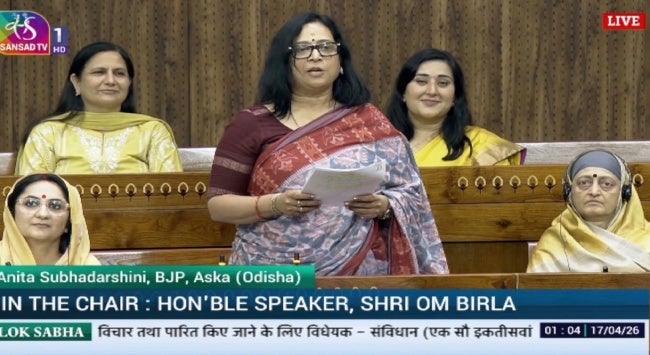
The Bharatiya Janata Party (BJP)-led government had called a special session of the parliament between 16 and 18 April 2026 to amend the law on 33 per cent reservation of seats for women in parliament and state assemblies – the Constitution (131st Amendment) Bill – and link it to an expansion of the lower house of parliament (Lok Sabha) and a delimitation of constituencies. However, the legislation was defeated in the Lok Sabha on 17 April 2026 with 298 votes in favour and 230 against, significantly short of the two-thirds majority needed for a constitutional amendment. This is the first time that under Prime Minister Narendra Modi a constitutional amendment bill failed to receive the required numbers.
The BJP pitched the legislation as one that should be passed unanimously in the interest of empowering women and increasing their representation, which is around 14 per cent in the Lok Sabha. However, there were three things going against it. The first was making women’s reservation contingent on two other constitutional amendments providing for an increase in the number of seats in the Lok Sabha – up to 850 from the existing 550 seats – and redistribution of seats for states based on the latest published census. The second was the way the legislation was introduced, much like some earlier important legislations, without any prior consultation with opposition parties or floor management. The third was the timing of the legislation, days before the assembly election in Tamil Nadu, one of the southern states at the centre of the controversy over the redistribution of seats, and West Bengal, when the special session could have been convened after the polls or the law introduced in the coming monsoon session.
Many of these issues played out in the heated two-day debate in the Lok Sabha which for the first since 2014 saw the entire opposition united against the government. The prime minister took the high moral ground empahasising that women’s reservation was the need of the hour. “If we all move forward together, this decision will not go in favour of any one political party, but in favour of the country’s democracy”, he said. He and most of the other speakers representing the government did not go into the expansion of the Lok Sabha or delimitation that was at the heart of the controversy. This was left to Home Minister Amit Shah who tried to assure the House that no state, including the southern states, would lose out on seats. During his final speech, before the legislation was put to vote, he said that the government was willing to include provisions related to a proportionate increase in the number of seats in each state by 50 per cent.
None of these arguments swayed the opposition parties who showed rare unity in standing up against linking women’s reservation with expanding the Lok Sabha and delimitation. During the debate, the leader of the opposition, Congress leader Rahul Gandhi, alleged, “This has nothing to do with empowering women. It is an attempt to change the country’s electoral map, using and hiding behind India’s women.”
Following its defeat on the floor of the House, the BJP is taking the issue to voters and targeting the opposition for blocking the legislation on women’s reservation. On 18 April 2026, in television address to the nation, Modi strongly criticised the opposition and expressed the belief that the opposition would pay for it electorally. He said, “[The] opposition has committed a sin by opposing women reservation and they will be surely punished for this.” He added the opposition parties had committed “foeticide” by killing the women’s reservation legislation. Modi has already begun highlighting the issue in his election rallies in Tamil Nadu and West Bengal during the final days of campaigning in the two states.
Despite the anguish of the BJP and the prime minister over the defeat of the women’s reservation legislation, two questions remain. One, if the government was so keen on the women’s quotas, why did it not delink it from expansion of the Lok Sabha and delimitation and test the opposition’s resolve? Most opposition parties have gone on record saying that they are happy to back the women’s reservation bill if the quota is not linked to delimitation and implemented on basis of the existing strength of the Lok Sabha. Two, the BJP could have set an example by unilaterally instituting a one-third quota for women when nominating candidates for the general and Assembly elections. In fact, historically the BJP’s nomination of women candidates has been well below the 33 per cent proposed quota for women. The BJP, along with the Congress, also lags behind some of the regional parties in this respect. For the 2024 general elections, 16 per cent of the BJP’s and 13 per cent of the Congress’ candidates were women compared to 33 per cent for the Biju Janata Dal, 29 per cent for the Rashtriya Janata Dal and 25 per cent for the Trinamul Congress (TMC).
In the ongoing West Bengal elections, the percentage of women nominated by the BJP is 11 per cent compared to the TMC’s 19 per cent. In Tamil Nadu, the BJP has fared better with 19 per cent women candidates though it is contesting only 27 seats compared to 293 in West Bengal.
While these questions will remain, the resonance of the women’s quota with the voters, especially women, will continue to be debated once the results in Tamil Nadu and West Bengal are out and in future assembly and general elections.
. . . . .
Dr Ronojoy Sen is a Senior Research Fellow and Research Lead (Politics, Society and Governance) at the Institute of South Asian Studies (ISAS), an autonomous research institute at the National University of Singapore (NUS). He can be contacted at isasrs@nus.edu.sg. The author bears full responsibility for the facts cited and opinions expressed in this paper.
Pic Credit: X @neelkanthbakhsi
-
 More From :
-
 Tags :
-
 Download PDF