

Summary
The 2026 assembly election in Tamil Nadu in India represents a watershed moment for the state, given its history of the Dravidian movement and its implied unique governance trajectory. This election comes at a time when the competitive space in the state has opened up to new parties and ideologies outside of the Dravidian model, raising the possibility of different political idioms, growth paradigms and redistributive agendas taking root amidst a changing socioeconomic milieu. Voting patterns on 23 April 2026 will also reveal how the values of voters of demanding accountable yet equitable governance from political leaders have transformed in recent years.
Introduction
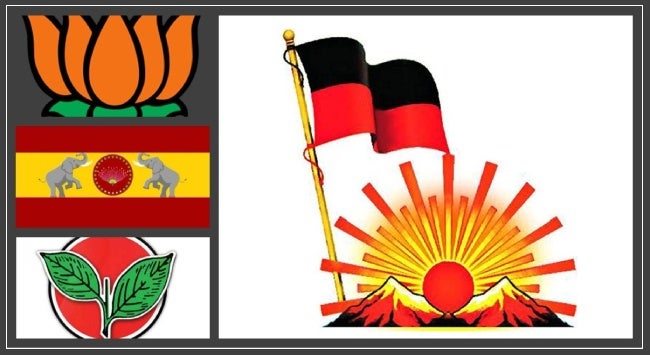
As more than 56 million electors get ready to cast their vote on 23 April 2026 across Tamil Nadu, this Indian state faces an acid test for its core paradigm of governance, which has stood relatively unchallenged for the best part of 60 years – the Dravidian model. Leading the charge as one of two major, self-proclaimed legatees of the Dravidian movement is the incumbent Dravida Munnetra Kazhagam (DMK) party headed by Chief Minister M K Stalin, the force behind the last five years of rule in the state, a cohesive political vehicle rooted in the core tenets of the Dravidian model’s values, including prioritising the rights, culture, language and autonomy of the state and its people. Vying for power as the strongest opposition party of Tamil Nadu today is the All India Anna Dravida Munnetra Kazhagam (AIADMK) party, the second key political offshoot of Dravidian politics, headed by former Chief Minister Edappadi K Palaniswami.
Two relatively newer entrants to the state’s politics have also stepped into the electoral battlefield this time, opening up the competitive dynamics well beyond the pattern of alternating power between the Dravidian majors seen for over a half century to date. On the one hand, the Bharatiya Janata Party (BJP) has joined hands with the AIADMK and pulled it into the former’s national-level political bloc – the National Democratic Alliance. On the other, film star Joseph Vijay Chandrasekhar, known professionally as Vijay, has launched a party called the Tamilaga Vettri Kazhagam (TVK), and appears poised to take a share of the votes that would otherwise have been garnered by the other key players, including the DMK, the AIADMK and the BJP, not to mention smaller parties in the fray.
Despite a rich tradition of voting in Dravidian parties headed by power-centralising, charismatic leaders, there are reasons to believe that a range of new key factors will drive voter preferences in 2026 that may have been absent for the most part of the previous and the early years of the current century. These bear further analysis if a complete map of the electoral terrain is to be presented.
Performance over Personality
A critical shift that occurred during the late 2010s was the end of the rule of M Karunanidhi and Jayalalithaa, respectively the heads of the DMK and the AIADMK. As noted in my earlier paper, “While their paths to power may have differed significantly, both Karunanidhi and Jayalalithaa came to be known for their white-knuckled grip on the reins of power, not only in terms of centralised decision-making while running the state government, but also as the leaders of their respective parties who each had to hold together a vast cohort of party cadres reflecting the full variegation of Tamil Nadu society in terms of castes, sub-castes, regions, religions, gender and more.”[1]
Their passing (Jayalalithaa in 2016 and Karunanidhi in 2018) meant that going forward, however strong the identification of voters with the original values of the Dravidian movement, launched by C N Annadurai and Periyar E V Ramaswamy, among others, as a de facto resistance movement to Brahmin dominance of state and public and private institutions in the first half of the 20th century, subsequent state governments would have to perform – or promise to perform – in terms of an acceptable standard of good governance to be elected to power.
Both the DMK and the AIADMK have a tangible record to speak of in this context.
The DMK, led by Stalin, has used the past five years of its time in government to press forward with three prongs of public policy – regarding growth, welfare and state autonomy. On the growth front, Tamil Nadu has seen a real economic growth rate of 11.2 per cent during 2024-25, including an average manufacturing growth rate of 9.38 per cent from 2021-22 to 2024-25.[2] This has been achieved on the back of various policies to support investment across sectors including, for example, State Goods and Services Tax reimbursement for eligible industrial projects supported through a single window portal and the annual Tamil Nadu global investors meet designed to bring in a variety of memorandums of understanding for investment in areas such as semiconductors, automobiles and electronics.
In terms of redistributive policies, the incumbent government has implemented a wide range of direct transfer schemes, including initiatives to boost women and children’s welfare (Kalaignar Magalir Urimai Thogai), to subsidise and support school education (Pudhumai Penn Thittam and Tamil Pudhalvan) and to improve skill development outcomes for college students (Naan Mudhalvan).[3] On the state autonomy front, the government has strongly pushed back against what it describes as attempts by the Indian government to push Hindi imposition in its new National Education Policy, against actions of a former Governor of the state who sought to delay his approval of a policy passed by the Stalin government regarding National Eligibility cum Entrance Test and fought hard for a greater share of funds from the central government regarding Goods and Services revenue and disaster recovery support. In the light of this governance record, the DMK enjoys a perception of broad acceptability and robust electability, even if opposition leaders raise concerns about issues such as crime in the context of women’s safety, rampant large-scale corruption in public offices and the over-centralisation of power within the party in the hands of Stalin’s family.
Indeed, the AIADMK seeks to set itself apart in this context, for ever since the loss of its political matriarch, Jayalalithaa, also known by the moniker of Amma (Mother), it has not only not had dominance of its cadres by any single-family dynasty; indeed, it has suffered from episodic factional infighting. As my earlier paper notes, in the AIADMK under Jayalalithaa “… genuflection had become the sole means of political survival, leaving no other leader strong enough to command the rank and file and disparate sub-groups within the AIADMK. It was thus unsurprising that after 2016, the party’s top leadership structure imploded in a bitter conflict between former Jayalalithaa acolyte, O Panneerselvam, and former chief minister of Tamil Nadu, Edappadi Palaniswami.”[4] Even though Palaniswami won plaudits for his role as Chief Minister for delivering good governance to the people of the state in the context of flood management, for negotiating with the Centre for funds to fight the COVID-19 pandemic and for opening up industrial promotion policies to encourage fresh rounds of investment into the state, he was ultimately unable to quell the rumblings of dissent within his party.[5] That after several years of internecine courtroom drama, this ultimately led to the Palaniswami faction of the AIADMK emerging bruised but undefeated is unsurprising, yet it has left broader questions on the long-term stability of the party unanswered.
Identity Politics or Bread and Butter Issues?
While there is a strong performative impulse for the two Dravidian parties as far as the upcoming election is concerned, the other two key players in this field – the BJP and the TVK led by Vijay – are both parties that are still mired in the early phase of seeking political roots in Tamil Nadu, which implies a far greater preoccupation with the question of identity over pragmatic issues impacting the daily lives of the denizens of the state.
While the BJP has been present in the state since the 1980s and won a stray seat for the first time in the assembly election of 1996, it made considerable inroads in 2021 when it picked up four seats and a vote share of 2.62 per cent (the DMK’s vote share was 37.7 per cent and the AIADMK’s was 33.29 per cent, for comparison). While the party’s campaign messaging has focused strongly on development under the “double engine model”, where a friendly government in New Delhi could more readily assist a state government that was led by a member of the NDA, it has also turned the spotlight on the alleged corruption of public institutions, including scams and leakage of funds in heavily government-regulated sectors such as liquor production and distribution, and a lack of security and safety for women.
However, in the case of the saffron party, it is the degree of voter appeal for the subtext of Hindu nationalism that will truly determine its electoral success, both in this election and in years ahead. This brings us to a pivotal question for the state: Do the voters of today – younger, digitally-savvy and not necessarily rooted in the values of the Dravidian movement to the extent that their parents’ generation was – feel as strongly about Tamil exceptionalism and the imperatives of state autonomy (for example, in terms of resisting Hindi imposition) as their older relatives do? Are they more susceptible to being wooed by the BJP’s promise of a unifying Hindu identity built on the personality of Prime Minister Narendra Modi and the notion of Viksit Bharat (Developed India) – the dream of an advanced Indian economy by 2047? It is certainly true that this generation of voters is navigating a new world that has seen a growing footprint of artificial intelligence, a world that demands a different type of labour force and requires an agile state government to support its education and healthcare needs accordingly. Yet it would be unwise to discount the power of nearly 60 years of Dravidian politics overnight – whatever the allegations of nepotism or corruption associated with the incumbent government, Stalin and his party stand firm as one of the last bastions of a dissenting voice against the homogenising force of Hindutva politics on the national stage. Combine this with the listable achievements of the DMK-led government in terms of keeping Tamil Nadu on a steady growth path through turbulent times and it truly does leave doubts about the possibility of a large-scale shift of voter support away from the incumbent.
Finally, regarding the Vijay factor, the TVK leader has emerged in the political arena during this election cycle as the latest in a long line of actors seeking to mobilise votes for an opportunity to taste power in government. Among his predecessors, some have succeeded where others faltered. The early successes as entrants into Tamil Nadu’s politics from the silver screen include former scriptwriter and poet Karunanidhi of the DMK, former AIADMK head and regional superstar actor who featured regularly in Robin-Hood-type roles M G Ramachandran, and his protégé, formerly a film star too, Jayalalithaa. The three of them effectively used the medium of cinema to convey propagandistic messages about their political values, which essentially encompassed varying forms of populism built on the idea of a benevolent political patriarch or matriarch distributing largesse to the masses. Since their time, relatively fewer have trodden the same path with the same degree of success in getting their movie fan clubs or mandrams to mobilise voters politically. While actor Vijayakant won 29 seats in 2011 and his party, the Desiya Murpokku Dravida Kazhagam continues to be a minor force in Tamil politics in the aftermath of his death in 2023, other superstars of Tamil cinema such as Rajinikanth and Kamal Haasan failed to make a splash after announcing political intentions or forming a nascent political party.
On the one hand, Vijay appears to enjoy strong support from the youth and women voters across age cohorts, to the point where his mismanagement of a political rally in Karur last September that led to a stampede and the deaths of at least 41 persons did not appear to dent his standing seriously. On the other hand, apart from relatively vague claims about championing the fight against corruption in Tamil Nadu, neither Vijay nor his party have come out strongly with a definitive political agenda that distinguishes itself from what the DMK and the AIADMK have anyway been implementing effectively, for example, in terms of welfare and redistributive measures, for over half a century. However, the fact that he is a Christian and does not innately have any particular caste leaning gives him a unique flavour as a political leader and potentially appeals to those voters who are seeking to stand apart from the dominant theme of caste-based voting that is widely found across Tamil Nadu. These caste-independent voters, whose numbers might be surprisingly large and cut across party lines, could end up playing spoiler to all the other major contenders, including the DMK, the AIADMK and the BJP. The key question facing Vijay and the TVK is this: while they are sure to have some impact in terms of electoral outcomes in the 2026 election, will they receive subsequent support – in terms of votes and funding – in sufficient amounts so as to contest a future election as a viable challenger to the two major Dravidian parties?
Conclusion: Opening up Political Contestation
The 2026 state assembly election in Tamil Nadu represents a relatively more open contest of political mobilisation and heft than recent years have seen. With the passage into the annals of history of Karunanidhi and Jayalalithaa, the era of hyper-centralising, soft authoritarian politics has faded in the state. Performance and issues matter more than ever to the common man and woman. The people of the state may still approach voting through the lens of Tamil exceptionalism, even as they grapple with new ground realities in terms of changing economic priorities for the workforce buttressed by expectations that the state government will step in to accelerate welfare measures and hold the social safety net intact for the vulnerable.
Amidst these tectonic shifts in economic opportunities and the implied changes in the labour force, the opening up of the competitive space in politics has brought more choices to voters in 2026 than in previous elections. Which way they lean on voting day will strongly impact the future trajectory of the state as a truly remarkable force for growth and transformation in modern India.
. . . . .
Dr Narayan Lakshman is the Opinion Editor and a Senior Associate Editor at The Hindu. He is also a Non-Resident Senior Fellow at the Institute of South Asian Studies (ISAS), an autonomous research institute at the National University of Singapore (NUS). He can be contacted at narayan@thehindu.co.in. The author bears full responsibility for the facts cited and opinions expressed in this paper.
[1] N Lakshman, “Standout State: Tamil Nadu in the 2024 Election”, ISAS Working Paper No. 374, Institute of South Asian Studies, 17 May 2024, https://www.isas.nus.edu.sg/papers/standout-state-tamil-nadu-in-the-2024-election/.
[2] Economic Survey of Tamil Nadu 2025-26, Government of Tamil Nadu State Planning Commission; pp 1-2, https://spc.tn.gov.in/wp-content/uploads/Economic-Survey-Highlights-Eng.pdf.
[3] “Tamil Nadu government lists out welfare programmes”, The Hindu, 14 July 2024, https://www.thehindu.com/news/national/tamil-nadu/tamil-nadu-government-lists-out-welfare-programmes/article68402862.ece.
[4] N Lakshman, “Standout State: Tamil Nadu in the 2024 Election”, op. cit.
[5] N Lakshman, “Tectonic turbulence in Dravidian politics”, The Hindu, 11 March 2021, https://www.thehindu.com/opinion/lead/tectonic-turbulence-in-dravidian-politics/article34039074.ece.
Pic Credit: Pic Credit: Wikimedia Commons and ISAS-NUS
-
 More From :
-
 Tags :
-
 Download PDF