


Summary
Iran’s attempt to assert sovereign control over the Strait of Hormuz has generated competing proposals for the waterway’s future governance. India has taken a firm legal position, demanding unimpeded freedom of navigation. With the collapse of the United States-Iran talks in Islamabad on 11 April 2026, New Delhi must now move beyond affirming principles toward active participation in shaping Hormuz governance.
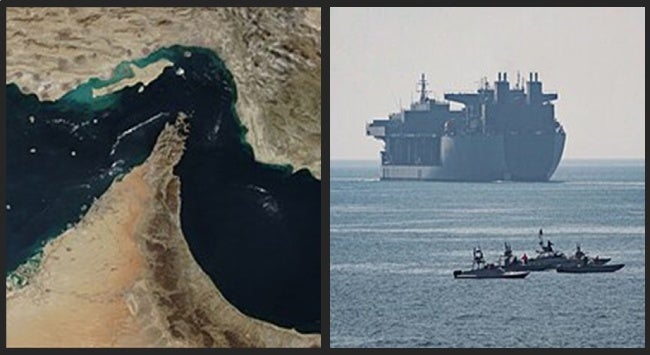
Following the massive United States (US) and Israeli strikes against Iran, including the targeting of its top political and military leadership, Tehran responded by closing the Strait of Hormuz, a move it had threatened for decades but never executed. Beginning in early March 2026, Iranian forces declared the Strait shut, launched attacks on commercial shipping and deployed naval mines across key transit routes. Tanker traffic, which had averaged well over 100 vessels a day, collapsed dramatically. Tehran then began selectively permitting passage for friendly countries – reportedly for a fee.
The consequences for Asian powers, which are major importers of oil from the Persian Gulf, were severe. For India, what had long been a distant vulnerability suddenly became a crisis with direct consequences for 1.4 billion people. The number of Indian-flagged vessels transiting the Strait fell sharply, reflecting physical risk and soaring insurance costs alike. The crisis underscored a fundamental truth: India’s economic resilience is inseparable from the security of sea lines of communication through the Hormuz Strait.
New Delhi’s response was emphatic. At the crisis’s outset on 9 March 2026, India’s External Affairs Minister S Jaishankar made a suo motu statement in the Rajya Sabha, placing energy security among India’s highest priorities. At the United Kingdom (UK)-hosted conference of over 60 nations in early April 2026, India’s Foreign Secretary Vikram Misri reiterated that freedom of navigation and unimpeded transit through international straits are non-negotiable principles essential to global economic stability. He cited specific losses: four Indian liquefied petroleum gas tankers affected, seafarers killed. In welcoming the US-Iran ceasefire, the Ministry of External Affairs expressed hope that the Islamabad talks would ensure that “unimpeded freedom of navigation and global flow of commerce would prevail through the Strait of Hormuz”.
International law is unambiguous. The right of transit passage through international straits is widely regarded as non-suspendable, even during armed conflict. Iran’s actions represent a clear departure from these principles. More ambitiously, Tehran has advanced the claim that the Strait falls under its sovereign authority and may be regulated accordingly – a position formalised in its 10-point negotiating proposal, which explicitly demanded international recognition of Iranian control over the waterway. Proposals to levy transit fees (to be shared with Oman that sits across the Strait) running into millions of dollars per passage point to a deliberate attempt to redefine the Strait’s legal status.
India’s statements left little doubt about its opposition to this approach. Yet legal clarity has been accompanied by diplomatic ambiguity. While invoking the United Nations Convention on the Law of the Sea principles, New Delhi has avoided direct confrontation with Tehran and has not endorsed the use of force to reopen the Strait. More significantly, India has pursued quiet bilateral arrangements with Iran to secure passage for some of its vessels. This reflects a familiar tension in Indian foreign policy: the difficulty of reconciling legal universalism with a preference for bilateral accommodation. In the current context, such high-minded idealism and geopolitical flexibility erode India’s normative position while leaving it strategically dependent on decisions made by others.
That duality is now increasingly unsustainable, given the breakdown of the Islamabad talks and the emergence of more assertive international approaches. Three models are competing for primacy.
The first is the Iranian model that seeks to transform a global common into a regulated national asset. New Delhi cannot endorse this.
The second is the American model, marked by coercion and transactionalism. Washington has demanded the Strait’s immediate and unconditional reopening and sent warships into the Persian Gulf even as negotiations were under way in Islamabad. There have also been reports of US President Donald Trump exploring a bilateral arrangement with Tehran over Hormuz control – an idea Iran has apparently rejected. India cannot accept a bilateral US-Iran deal that sidelines all other stakeholders and equally undermines existing international legal norms. After the Islamabad talks ended inconclusively, Trump ordered a US naval blockade starting on 13 April 2026 of all ships entering and exiting the Hormuz Strait. India is bound to have challenges dealing with this as well.
The third is the multilateral model, led by the UK. A coalition of over 40 countries has been assembled to ensure freedom of navigation, accompanied by military deployments and diplomatic coordination. This approach seeks to uphold existing legal norms through collective action. While more inclusive than bilateral arrangements, questions about long-term sustainability and burden-sharing remain.
Beyond these immediate responses, a more ambitious proposal has entered the debate: a formal institutional framework for governing the Strait. The concept of a multinational body – described as a ‘Strait of Hormuz Company’ – would bring together coastal states and major user countries, including India, to manage navigation, security, and dispute resolution. While theoretical at this stage, such proposals highlight the growing recognition that existing legal frameworks may be insufficient to manage the high-intensity geopolitical competition at the Hormuz.
For India, the Hormuz crisis is a reminder of an important geopolitical reality: principles without participation underline its weakness and undermine its much vaunted strategic autonomy. In recent years, India has advanced its claim as a regional security provider and a responsible contributor to the management of global commons. Those claims are now under a severe test.
The emerging governance architecture of the Strait – whether it is US-driven, coalition-based, institutionalised or hybrid – will be defined by those willing to commit resources and accept risk. India has some capabilities: a steadily expanding navy, experience in long-range deployments and strong diplomatic ties across the Gulf. What has been missing though is an appetite for strategic risk, which undoubtedly will be substantial. It is important to note that India is not alone in its risk aversion. None of the other Asian powers, including China and Japan, are yet ready to undertake at least a part of the military burden of keeping the Hormuz Strait open.
. . . . .
Professor C Raja Mohan is an Honorary Senior Fellow at the Institute of South Asian Studies (ISAS), an autonomous research institute at the National University of Singapore (NUS). He can be contacted at crmohan53@gmail.com. The author bears full responsibility for the facts cited and opinions expressed in this paper.
Pic Credit: Wikimedia Commons
-
 More From :
-
 Tags :
-
 Download PDF