


US-Iran Conflict Escalation in the Indian Ocean:
Implications for Sri Lanka’s Foreign Policy
Chulanee Attanayake, Rajni Gamage
9 March 2026Summary
The United States’ (US) attack on an Iranian warship in the Indian Ocean has extended the ongoing US-Israel-Iran conflict into South Asia’s neighbourhood. How regional countries respond will shape their ability to ensure free and safe passage through these critical waters while avoiding entanglement in a broader war.
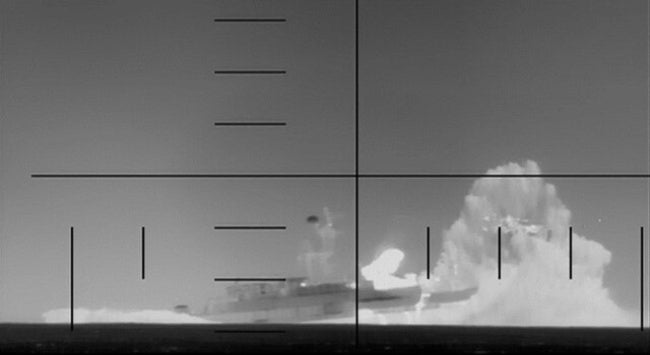
On 4 March 2026, a United States (US) Navy submarine torpedoed and sank the Iranian frigate, IRIS Dena, in the Indian Ocean, roughly 40 nautical miles off Sri Lanka’s southern coast. The incident indicates that the war involving the US, Israel and Iran, which entered a new phase of escalation in late February this year, has spilled beyond the region, making the Indian Ocean a ‘secondary theatre’ of great power politics.
IRIS Dena, one of Iran’s most modern frigates, was on its way back home after taking part in Milan 2026, the International Fleet Review and multilateral exercise organised by India in the Bay of Bengal from 18 to 25 February 2026. The exercise brought together navies from across the region and beyond for a series of coordinated naval engagements and exchanges. In the aftermath of the attack, India’s Ministry of External Affairs rejected claims that American forces had used Indian ports to launch strikes on Iran, describing such allegations as “fabricated”.
US Defense Secretary Pete Hegseth confirmed the torpedo attack on an Iranian ship in international waters, justifying it on the grounds that the US was asserting its military advantage against Iran. The Iranian Foreign Ministry condemned the attack, stating that the US had “perpetrated an atrocity” and warning that it would “…bitterly regret [the] precedent it has set”.
Agency amidst Constraints
This event marks a significant escalation of a “hot war” entering Sri Lanka’s Exclusive Economic Zone (EEZ) and highlights the structural vulnerabilities faced by a small maritime state situated along one of the world’s busiest sea lanes. Sri Lanka occupies a strategically important location in the Indian Ocean, yet its maritime security capabilities remain limited relative to the vast maritime area it is responsible for monitoring. Despite being a small island state, Sri Lanka is responsible for a search and rescue region that is approximately 27 times larger than its landmass. Monitoring and responding effectively across such a large maritime area present a considerable operational challenge. Sri Lanka currently does not possess the capacity to always monitor this entire region independently.
Existing surveillance capabilities are largely coastal-centric. The navy operates a network of coastal radar stations and automatic identification system receivers designed primarily to track vessel movements near the shoreline and along key shipping routes. However, these systems provide limited coverage further out at sea. Aerial surveillance capacity also remains limited, restricting the ability to maintain continuous monitoring across the wider maritime domain. At the same time, the island has minimal to no undersea surveillance capability. This results in a major intelligence blind spot and significantly limits Sri Lanka’s undersea domain awareness.
The episode serves as both a warning and a wake-up call for Sri Lanka. It underscores the urgency of strengthening maritime security capabilities in both surface and underwater domains to improve surveillance, early warning, and overall maritime domain awareness. The incident exposed the limits of existing monitoring capacity and highlighted the need for greater investment in maritime infrastructure, coordination and search-and-rescue capabilities.
However, the incident also demonstrated Sri Lanka’s capacity to act beyond the limitations often associated with small states. The episode showcased how the Sri Lankan Navy was able to coordinate the evacuation of Iranian crew members and respond professionally to a diplomatically sensitive, humanitarian situation unfolding within its maritime jurisdiction.
Sri Lanka’s Moral Leadership for an Indian Ocean of Peace
For Sri Lanka, the US’ attack took place outside its territorial waters but within its EEZ, placing the situation within Colombo’s jurisdictional responsibility for search and rescue and environmental protection, in accordance with its international obligations. These operations rescued 30 crew members and recovered around 80 bodies from the water. At the time of writing this article, Sri Lanka had also successfully evacuated over 200 crew members from a second Iranian ship off its coast. The Sri Lankan Navy also took custody of the vessel and moved it to Trincomalee Port for safekeeping while managing the humanitarian and operational dimensions of the incident.
Issuing an official statement, Sri Lankan President Anura Kumara Dissanayake emphasised that Colombo was acting as a neutral state under international law, including the United Nations (UN) Convention on the Law of the Sea, to prevent further loss of life amid the escalating conflict between the US, Israel and Iran. He reiterated Sri Lanka’s neutral position and noted that Colombo’s decision to evacuate crew members from IRIS Bushehr was driven by the humanitarian imperative to save lives.
Sri Lanka’s response illustrates how even resource-constrained, small maritime states can play constructive roles in global politics, advocating respect for international law, promoting restraint among larger powers operating in the Indian Ocean and supporting a moral discourse in contrast to power politics. Recognising that it operates within India’s immediate neighbourhood, where India positions itself as the “net security provider” in the region, Sri Lanka can pursue such initiatives in a manner that complements regional stability. Sri Lanka has worked in such a manner in the region in the past, particularly through its active engagement in the Non-Aligned Movement and the proposed Indian Ocean Zone of Peace as a UN resolution in 1971.
. . . . .
Dr Chulanee Attanayake is a Non-Resident Fellow at the Institute of South Asian Studies (ISAS), an autonomous research institute at the National University of Singapore (NUS). She can be contacted at aattanayake@swin.edu.au. Dr Rajni Gamage is a Research Fellow at the same institute. She can be contacted at r.gamage@nus.edu.sg. The authors bear full responsibility for the facts cited and opinions expressed in this paper.
Pic Credit: Wikimedia Commons
-
 More From :
-
 Tags :
-
 Download PDF